Introduction
Research on the energy transition has been criticized for being technologically focused and overlooking the importance of democratic engagement (Lawhon & Murphy, 2012). The development of renewable energy technologies and policies is predominantly the work of governments, industry, and engineers. Meanwhile, the socio-technical interventions required, including new infrastructural developments, often take place in everyday places, such as urban and rural landscapes, as well as in people’s homes (Levenda, Behrsin & Disano, 2021). In contrast, the literature on energy democracy discusses and develops ideal worlds where renewable energy systems are considered more just, more decentralized, and socially controlled, where access is equitable and benefits are dispersed, and where energy consumption and production would harm neither people nor the environment (van Veelen & van der Horst, 2018). Energy democracy is closely related to the increasingly studied concept of energy justice. The energy justice framework (see Jenkins et al., 2016) stipulates that justice in the energy transition should include questions of (1) distribution of burdens and benefits (e.g., distributional justice), (2) who is responsible (e.g., procedural justice), and (3) whether needs of (vulnerable) citizens are respected and recognized (recognition justice). Particularly, the (mis-)recognition of citizens is considered a possible difficulty in realizing a just energy transition (van Uffelen, 2022).
Because the necessary interventions for the energy transition affect their living environment, as well as for democratic and justice reasons, there is a need for informed citizens who can weigh evidence on the issue and discuss and debate potential decision options (Abelson et al., 2003; de Vries et al., 2026). In addition, the lived experiences of citizens may inform both policy-makers and academics in designing the transition (Fiorino, 1990; Stirling, 2008). To accommodate this, over the last two decades, ‘deliberative mini publics’ have been conducted. Deliberative mini-publics generally refer to (1) a broadly inclusive and representative sub-group of an affected population engaging in (2) a structured deliberation enabled by independent facilitation (Ryan & Smith, 2014). Often these processes are designed by decision-makers and experts, hampering the inclusion of experiential knowledge, interests, and values of citizens (Smith, 2009). Deliberative democracy has been criticized for being primarily dominated by rationalistic forms of communication. According to Sanders (1997), deliberation works undemocratically, as it excludes those who are less likely to present their arguments in ways that we recognize as characteristically deliberative. This is especially the case for women, racial minorities, people with physical or mental disabilities, and the poor, whose speech cultures depart from ‘rationalist’ forms of discourse that privilege dispassionate argumentation, logical coherence, and evidence-based claims as practiced in the most exclusive kinds of scholarly debates, parliamentary procedures, and judicial argumentation.
In order to address critiques of instrumental use of deliberative mini-publics and to develop alternatives for cognitive and argumentative forms of deliberation, artifacts (materials) have been presented as a means of enhancing citizen participation, incorporating their interests, values, and emotions in deliberations (Boossabong, 2025; Hoffman, 2013). In the case of the energy transition, maps and digital spatial data actively shape political and geographical imaginaries of the energy transition. By visualizing future energy systems, their spatial demands, and their role in planning and decision-making, these visual materials, often produced by professionals, are very influential (Hohenthal & Rinkinen, 2026). Broms, Wangel and Andersson (2017) also pointed out that artifacts—including both material and human-made things, places, and spaces—can help us construct narratives that encompass information as well as values and emotions.
Building on this literature, the aim of this paper is to explore opportunities and challenges for the use of visual artifacts in mini-publics, organized to develop insights on what Dutch citizens consider ‘energy just’. We do so by investigating empirically what a just energy transition entails from the perspective of Dutch citizens who normally do not engage in participatory policy events. We introduced visual materials (maps, graphs, models, drawings) in convened and facilitated mini-publics.
We studied the case of the regional energy strategy in Overijssel as part of the National Climate Agreement (2019), in which national targets to generate renewable forms of energy are devolved to 30 energy regions. The intention in the Agreement was to bring decision-making regarding the size and spatial planning of renewable energy facilities (solar parks, wind turbines) closer to citizens, but at a higher level than municipalities (Prins & van der Belt, 2020). To enhance public support for the regional energy transition, policy guidelines urge regions to organize 50% local ownership of newly installed energy facilities. Yet, municipalities, regions, and citizens still struggle to participate or feel represented in the energy transition in a manner that suits their needs (Haarbosch, Kaufmann & Veenman 2021). The paper continues by explaining the concepts of deliberation and energy justice before addressing the specific methodology employed in organizing the mini-publics. The Results section presents the findings of our mini-publics in which four different types of visualizations were introduced. The Discussion and Conclusion sections draw on the outcomes of the sessions in terms of participants’ experienced justice considerations, the role of visualization materials in the deliberations, and the recommendations for further research and energy transition policies.
The Power of Artifacts in Deliberations
Sustainability transitions, such as the energy transition, have called for various repertoires of citizens’ participation at different levels of governance and with a variety of objectives (Daw et al., 2026; Metze et al., 2023). The better inclusion of future generations, nature, and other ‘imaginary publics’ has instigated more creative and arts-based forms of citizen participation (Meesters, Turnhout & Behagel, 2023). These scholars often aim to improve specific forms of energy justice: for example, intergenerational justice (Daw et al., 2026) or recognition justice (Haarbosch et al., 2026). Mini-publics are one way to enhance citizens’ participation that is aiming to better inform citizens but also to better include their local expertise, values, and interests. For more democratic and just decision-making in the energy transition, more creative and art-based forms of participation that move beyond speech offer an additional dimension to deliberation as ‘a talk-based approach to political conflict and problem-solving—through arguing, demonstrating, expressing, and persuading’ (Mansbridge et al., 2012: 4–5).
Artifacts have the potential to facilitate interaction among diverse stakeholders within the system, thereby fostering collaboration across different domains of knowledge (Metze, 2020). The use of these objects has been shown to encourage interaction, leading to the development of dialogue, problem-solving skills, and shared learning (Metze, 2020; Wenger, 1998). Visual language is a communicative artifact that is often referred to as ‘materials’. Visuals can be used in deliberative sessions (Oliver et al., 2008) and other forms of dialogue or knowledge and policy co-creation (Metze, 2020). Various sorts of materials are used in engagement with children, adults with dyslexia and disabilities, women, and psychological techniques (see, e.g., Hoffman, 2013; Kaplan & Howes, 2004). Materials can be used to create a safe space for participants to discuss and explore perspectives and experiences. This approach can support discussions on complex topics such as the energy transition in a democratic context.
Rather than creating appropriate representational material—an object that is being used to represent the topic of discussion—materials that are more open-ended and open to personal interpretation by diverse groups of citizens can be used to stimulate the exploration of perspectives, interests, and knowledge (Metze, 2020; Hoffman, 2013). However, a recent analysis of Hohenthal and Rinkinen (2026) on maps used in the energy transition suggested that next to participation processes, maps are mostly produced by energy elites (experts and decision-makers). Regardless of the benefits of better-informed argumentations, artifacts also have the potential to increase inequalities, as particular representations of problems can entrench and hide power differences in social decision settings (Bråten, 1973; Nærland & Engebretsen, 2023).
Well-designed representational material can both embody the questions of specialists and be understood and manipulated by public participants (Morrison & Dearden, 2013). This raises the question of the organizational power of (access to) information that is easily overlooked in the design of participatory sessions (Hohenthal & Rinkinen, 2026). Bråten (1973) highlights how particular representations of problems can entrench and hide power differentials in social decision settings. Using flowcharts to model work processes, for example, may draw attention to questions of efficiency of workflow, but does not support discussion of the quality of working life. This critique is relevant in the context of a just energy transition, given the crucial role of information in terms of both issues of access and transparency. Visual materials provided can narrow the scope of the discussion, nudging the priorities of policymakers over those of citizens. Such lack of attention to representational materials as moderating elements misses opportunities to address the policy–practice gap in more just ways; recognition of injustices may come to the fore.
Hence, on the one hand, artifacts promise to add an additional dimension to the talk-based deliberations that may enable a joint construction of narratives that encompass information as well as values and emotions. This may contribute to procedural and recognition justice of the energy transition. On the other hand, these visual artifacts may be very powerful ways to narrow the scope of deliberation and to easily mis-recognize or ignore considerations that may be relevant.
Methods
The empirical material was gathered in a research project (JustRES) funded by the Dutch Research Council (NWO). The study relies on deliberative mini-publics involving 42 participants in four different cities in two energy regions of Overijssel (a province in the east of the Netherlands). We developed four different types of visual materials that facilitated participants in their exchange of arguments (Spaa et al., 2022): (a) selected photo images, (b) energy-related drawings, (c) geographical maps, and (d) postcards. Using visual materials enables participants to articulate their agency in the process of understanding and interpreting knowledge.
Recruitment of participants
We recruited participants from an earlier survey conducted on energy justice in the region of Overijssel, specifically the respondents who expressed interest in continuing participation in the study (Van Duren, Mengerink & van de Ven 2022). To counter possible biases in this self-enrollment, we contacted local organizations that help citizens living in energy poverty with energy saving. Third, we sent emails to local (sport) clubs and neighborhood communities in these four cities to spread the word. Fourth, posters and flyers were spread in public spaces (library, pharmacies, restaurants, shops) in each of the cities approximately three or four weeks before the session. Per mini-public, we aimed for a mixture in age, gender, occupation, income, and type of home (Table 1). Due to ethical concerns, we could not ask for personal information beforehand; therefore, various recruitment strategies were applied to cover the diversity. In total, 68 persons signed up to participate, while 42 persons showed up at the events.
Table 1: Participants’ Characteristics.
| Location | Used material | Pseudonym | Gender | Age (years) | Recruited via |
| Enschede (session 1) | Soft map | Tom | Male | 46 | Email to energy corporation |
| Soft map | Ingeborg | Female | 47 | Email to survey respondents | |
| Soft map | Susan | Female | 54 | Email to survey respondents | |
| Soft map | Mark | Male | 51 | Email to survey respondents | |
| Soft map | Ahmed | Male | 35 | Flyer at the public library | |
| Zwolle | Interactive map | Adriaan | Male | 69 | Email to survey respondents |
| Interactive map | Grace | Female | 53 | Email to survey respondents | |
| Soft map | Jan | Male | 76 | Email to survey respondents | |
| Interactive map | Rianne | Female | 42 | Email to survey respondents | |
| Soft map | Emile | Male | 45 | Email to survey respondents | |
| Interactive map | Joël | Male | 20 | Relative of Rianne | |
| Interactive map | Jordi | Male | 23 | Flyer at Saxion (university of Applied Sciences) | |
| Soft map | Annet | Female | 58 | Flyer at public library | |
| Interactive map | Mikel | Male | 22 | Flyer at Saxion (university of Applied Sciences) | |
| Interactive map | Wilma | Female | 51 | Relative of Grace | |
| Soft map | Nicole | Female | 31 | Email to survey respondents | |
| Deventer | Interactive map | Geert | Male | 73 | Email to survey respondents |
| Soft map | Mike | Male | 60 | Email to survey respondents | |
| Soft map | Bianca | Female | 57 | Email to survey respondents | |
| Soft map | Robin | Male | 35 | Email to survey respondents | |
| Interactive map | Marleen | Female | Flyer (location unknown) | ||
| Soft map | Mark | Male | 54 | Email to survey respondents | |
| Soft map | Carina | Female | 55 | Email to survey respondents | |
| Interactive map | Donna | Female | 18 | Flyer at Saxion (university of Applied Sciences) | |
| Interactive map | Kaylee | Female | 22 | Flyer at Saxion (university of Applied Sciences) | |
| Soft map | Emma | Female | 25 | Researchers network | |
| Soft map | Marloes | Female | 27 | Invited through a local energycoach | |
| Kampen | Soft map | Steffie | Female | 27 | Flyer at supermarket |
| Interactive map | John | Male | 64 | Flyer at supermarket | |
| Interactive map | Jelle | Male | 73 | Email to energy corporation | |
| Interactive map | Karel | Male | Researchers network | ||
| Soft map | Mats | Male | Relative of Koen | ||
| Interactive map | Amber | Female | Relative of Martijn | ||
| Soft map | Ruben | Male | Relative of Martijn | ||
| Enschede (session 2) | Soft map | Rufi | Female | 56 | Researchers network |
| Interactive map | Pieter | Male | 41 | Email to energy corporation | |
| Soft map | Yasmin | Female | 50 | Via energy corporation | |
| Interactive map | Jan | Male | 62 | Via energy corporation | |
| Soft map | Enaam | Female | 29 | Via energy corporation | |
| Soft map | Rens | Male | 36 | Via former participant | |
| Interactive map | Ahmed | Male | 35 | Flyer at the public library (participated twice) | |
| Interactive map | Karin | Female | 65 | Via energy corporation |
Process design of the mini-publics
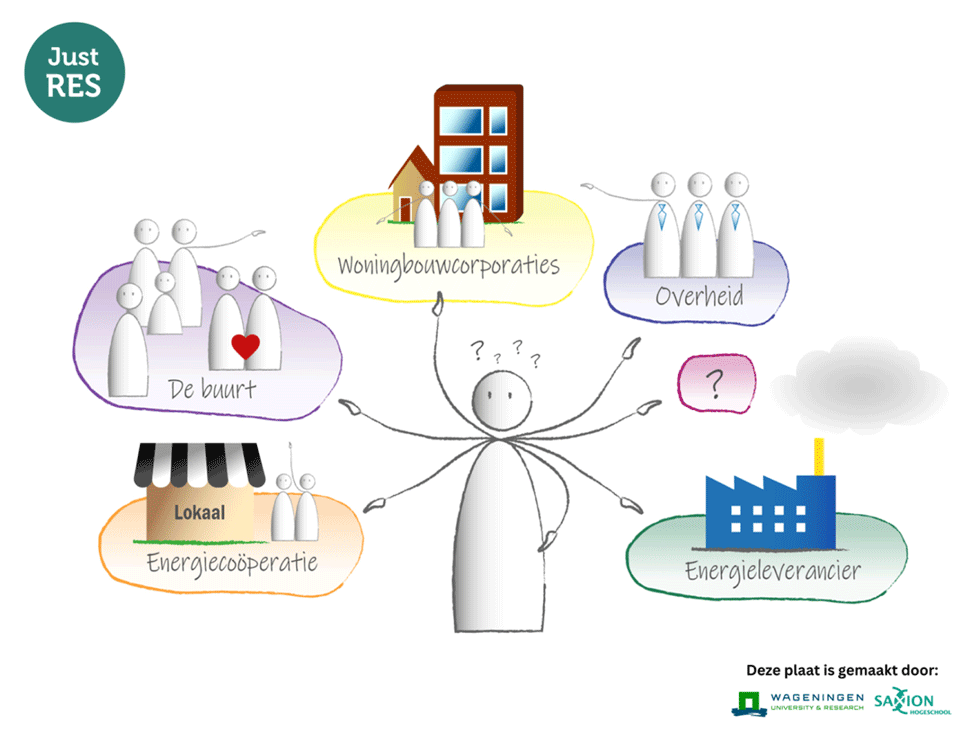
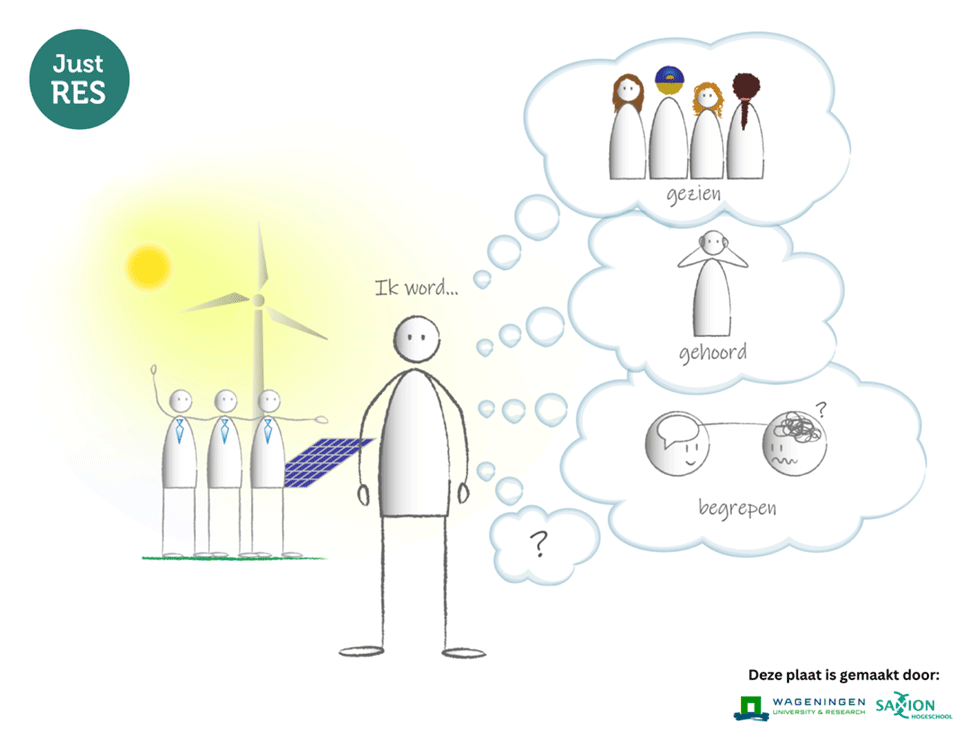
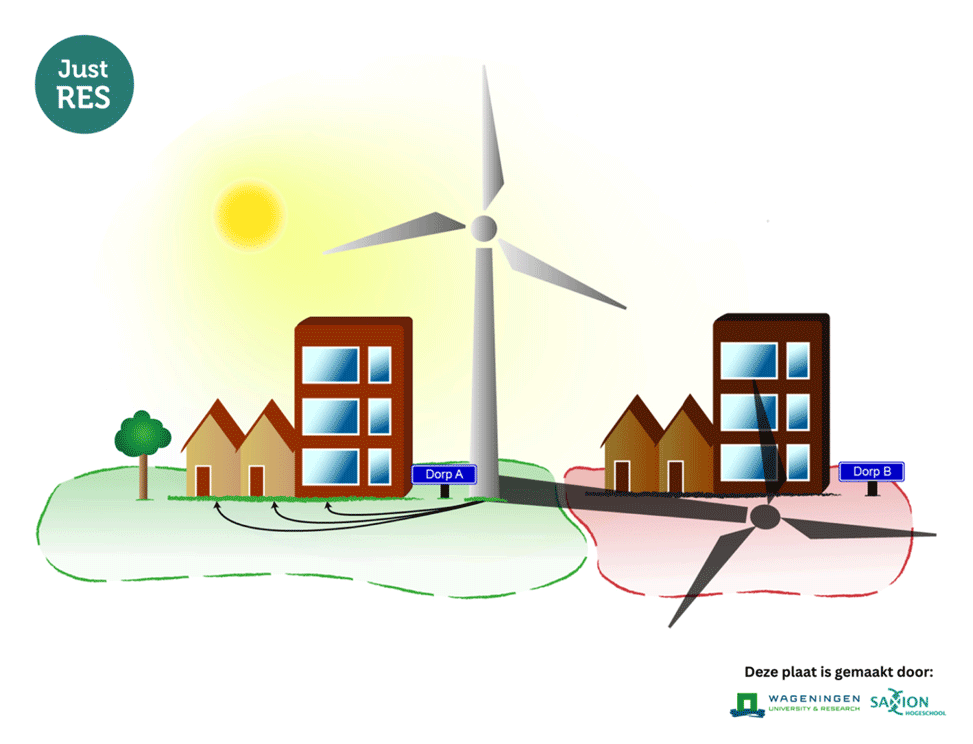
For each mini-public, we organized a warm-up round, a core part, and a closure. Each included visual materials. Participants were seated in groups of four participants, supported by one trained moderator1 per table. In the warm-up part, participants formulated their individual ideas about burdens and benefits in the energy transition, without being influenced by other (dominant) participants. To help them order their thoughts, the researchers selected snippets like newspaper fragments, photos, and icons, which were distributed over the tables. These materials were deliberately broad and not limited to energy themes, encouraging open interpretation. In the main part of the deliberations, half of the mini-public was deliberating with the support of geographical maps; the other half used energy justice-related drawings (see Figures 1, 2, 3, 4 and 5). They all explored justice dilemmas in the context of an energy transition. The maps were geographical maps with overlays covering topics such as energy poverty, nature parks, and pollution. These maps were physically printed on transparent foil. They provided rather abstract and expert-driven information. The drawings had been developed based on prior statements by the survey respondents (Van Duren Mengerink & van de Ven 2022) about energy justice. We selected three dilemmas for the drawings that each illustrated one dimension of justice: distributional, procedural, and recognition. These visual materials were tested and improved based on a pilot round in other provinces in the Netherlands (Gelderland and North Holland). In the final phase of the deliberations, participants completed a postcard task. They had to write down on the postcard the insight they found most meaningful and to indicate to whom it should be sent. Postcards were chosen for their narrative richness and ability to convey dense and detailed sources of information (Arreola & Burkhart, 2010).2
Analysis
The analysis focused on the role and function of the visual material in supporting the discussion and framing of ‘energy justice’ in the Dutch energy transition. Each of the discussions at the different tables was individually recorded and transcribed. All 11 recordings (35 hours of recording) were transcribed into text documents. Additionally, the open answers from the survey (Van Duren, Mengerink & van de Ven 2022) and field notes from all moderators were added to the dataset to reflect on the setting and atmosphere. For analytical purposes, it is not enough simply to assess deliberativeness by asking whether every individual has had equal input or whether those individuals show evidence of having changed their minds (Bächtiger & Parkinson, 2019). Analysis must be open to the possibility of a variety of communicative modes and performative repertoires, changing perspectives through narrative and a variety of unconventional interventions. It is this last requirement that we specifically explore by looking at the role of representational visual materials in studying a just energy transition from a citizen’s perspective. For data analysis, we created a codebook based on the three tenets of energy justice: distributional justice, procedural justice, and recognition justice, with the sub-codes availability, affordability, responsibilities, and burdens. After this first round of coding, the data was sorted on type of material (selected (photo) images and clippings, drawings, geographical maps, and postcards) to filter only relevant quotations in light of discussing a just energy transition. Based on this filtered quotation dataset, an inductive analysis was conducted.
Results: What Visualizations Do in Deliberations
This section presents how four different types of visual materials shape deliberative sense-making in mini-publics on a just energy transition. We found that different visualizations inform different deliberative functions: selected images enable participants to articulate lived experiences, relational dependencies, and moral intuitions; drawings support collective problem framing and reflection on responsibility, transparency, and the logics of decision-making; geographical maps encourage abstraction, comparison, and systemic justification of justice claims; and postcards prompt participants to translate deliberation into normative judgments about agency, responsibility, and action. As we will describe below, these materials structure how participants interpret, justify, and contest notions of energy justice.
Type I: selected images
When using selected images to discuss a just energy transition (see Figure 1), four themes predominantly appeared from the analysis: role of agency, experiences of mistrust, and sympathy for the other. It must be noted that these main themes appeared in conversations within a much broader context than only energy, such as next generations, responsibilities, and valued landscapes. In light of energy justice, understanding the logics behind a decision is a theme that intersects between the three tenets of justice, as it includes questions of (fair) distribution, access to information (procedural), and recognition of the needs of citizens (and of others) to experience levels of freedom to independently reflect and choose.
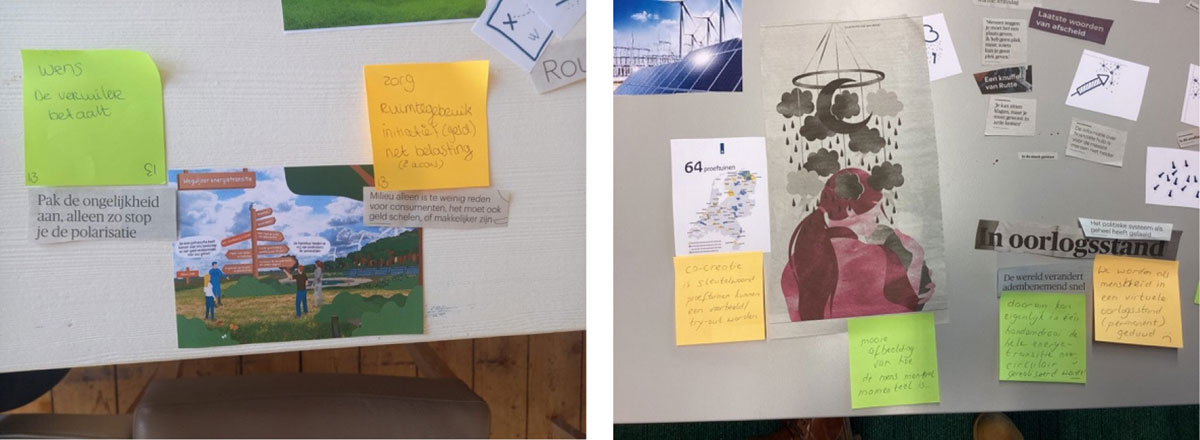
Figure 1: Example of selected images and clippings in the warm-up round in Zwolle (left) and Enschede (right).
Most expressions included issues related to feelings of agency in various ways. Across the dataset, participants expressed a strong sense of dependency, referring, for example, to institutions (‘Because I can’t find out what those companies do’), systems (‘Up to a certain level, I can determine that I want to pay a fair price. But can others do this too?’), and one another (‘You become dependent on others, which makes you inactive, because then what else am I supposed to do?’), which shaped their perceptions of agency and fairness in the energy transition. One participant used the assignment of choosing a visual (a labyrinth) and text to reflect on her own position. Surprisingly, the maze was turned into a forest when speaking. This shows that although the visuals might direct a participant in describing the visual, she still used her own words to describe the meaning of the visual about her experience. The imagery used in the research exercise helped participants articulate these otherwise abstract experiences of entanglement and confusion.
Delving further into the data, mistrust emerged as a central thread throughout the data. While it varied in intensity and focus, it consistently underpinned attitudes toward a just transition. Different ideas of mistrust are at play when citizens are considering a just energy transition. ‘Every time I get the same answer: we don’t know yet’. Disappointment and a lack of trust are expressed through doubt in the indecisiveness of the government. Regardless of her attempts, answers to questions specifically for her street/housing type remain unanswered. Although it demonstrates the high degree of willingness of the participant to visit information meetings, she is left with feelings of disappointment and frustration as those civil servants, regardless of their good intentions, cannot or are not allowed to share more information in light of a long-term timeline or a strategic plan to realize the energy transition and what this means for the individual. Mistrust also extended to experts and public discourse. Some participants critiqued contradictory messaging: ‘If someone who claims to be an expert says something negative about it … others repeat that’.
Others questioned the consistency of sustainability narratives, pointing to contradictions between government rhetoric and what is seen in practice. In the following quotations, a participant used the newspaper heading (‘Gas companies have forfeited their right’) to express his dissatisfaction with how companies dealt with challenges in the past. ‘I wholeheartedly agree. In my view, they have not acted ethically towards many people I know who still live there’. Another participant expressed the view that it is not logical for the government to promote a sustainable food system, such as food forests and indigenous crop breeding, while simultaneously observing vast landscapes filled with flowers intended for export.
A last theme that stood out in the analysis when using selected images was the high degree of sympathy for others. Sympathy for ‘others’ surfaced as a significant and often under-acknowledged justice concern. Clearly, all themes are deeply interconnected with others, as becomes clear in the following quote, showing aspects of mistrust (regarding the energy supplier) and sympathy for others (fair price for the neighbor): ‘Here in this picture I saw the green local idea. So if you have a roof you can put nice solar panels on, just use it and then share the power preferably with your neighbor. Because with the energy supplier, you get almost nothing for it anyway’.
Also in the following quotation, after choosing an image/phrase from a limited pile of (±50) items, forced participants to go beyond their first thoughts. ‘Some pictures were already gone, but I chose a sailing boat. Without an engine in this case. Ideal, pure clean energy. You can go anywhere you want. And I used the text: “In the end, she turned her wound into a miracle”. I think that the pain and worries we now have, we should turn that into something beautiful. Hopefully we can ensure that our descendants in 20 years, 30 years’ time, will think that we have turned the pain that we had back then into something fantastic’. The reason we included this quotation is because it demonstrates that through the use of a limited set of images, citizens can be challenged to reconsider their own ideas to bring a perspective that truly brings new reflections to the table, rather than a repetition of other participants at the same table. Through their elaborate explanations, other participants opened the floor to deliberate on ideas of norms and values and visualize a concrete imagination of a future.
In summary, selected images allow participants to explore and construct their own points of view within a debate/topic, specifically in addition to other group members. This resulted in a wide collection of perspectives at the start.
Type II: drawings
When using energy-related drawings to discuss a just energy transition, four themes predominantly appeared: the organization of responsibilities, a lack of transparency and mistrust, limited understanding of the rationale behind decisions, and a fluctuating sense of sympathy toward others. While the drawings (see Annex 1) were explicitly designed to reflect the three tenets of energy justice, participant responses revealed how these concepts intertwine in practice. Notably, the drawings frequently initiated conversations around procedural justice, but participants quickly broadened their reflections to encompass intergenerational responsibilities, local attachments, and societal inequalities—issues extending far beyond energy alone.
The procedural justice images (see Figure 3), for instance, frequently elicited responses centered on the distribution of responsibilities—raising questions about who should take the lead and how roles are coordinated across actors. In the following quotation, the participant both referred to the government as a leading actor (responsibilities) and to energy companies as the ones who will profit the most and are therefore also seen as influential. ‘Solar panels, I never got into it. I’m still waiting for the government. But now I have to give it back to [energy provider]; they are then going to balance it somehow, and they benefit, while I don’t’. This statement reveals how the perceived imbalance between effort and benefit deepens the sense of unfairness and detachment.
Also, other participants situated (procedural) justice in the (un)reliability of actors: when even trusted role models failed to act upon their own values, their own willingness to change diminished. This blurred the lines between personal agency and systemic responsibility. A participant explained, ‘Sometimes I think, maybe the whole climate crisis is nonsense. Because the people at the top don’t act either’. Still, participants often saw making principal choices—such as paying extra for green energy—as a way to assert personal responsibility: ‘I think that we as citizens, also have that responsibility to choose. You show that you want things to be different. So that the government can’t say, “Yes, but you don’t want anything else.” And I wanted to add that even poor people, like me, I can’t be the only one, who are willing to pay a little bit more for your principles’. Yet, responsibility was also experienced as frustrating when collective support was absent. One participant, describing herself as ahead of the troops, explained, ‘Often it is the case that I am too early. Organizations are not ready for the question or not understanding my question’. Others also expressed helplessness when their individual efforts did not translate into wider societal momentum: ‘There is maybe frustration and powerlessness there, because from my individual space and individual choices I can do that. It frustrates me to a certain extent that as a collective we don’t care that much about that’.
Next to that, drawings can help describe the current situation and recognize different positions. Although the drawing hinted at procedural justice, the participant related to recognition justice (see Figure 2): ‘Yes, I do think this picture reflects very well how I feel from time to time. Because everyone is pointing at everyone, and everyone is waiting for everyone, in the end exactly nothing happens’. This shows that if drawings are designed open-ended, they contribute actively to the involvement of multiple perspectives on the same situation.
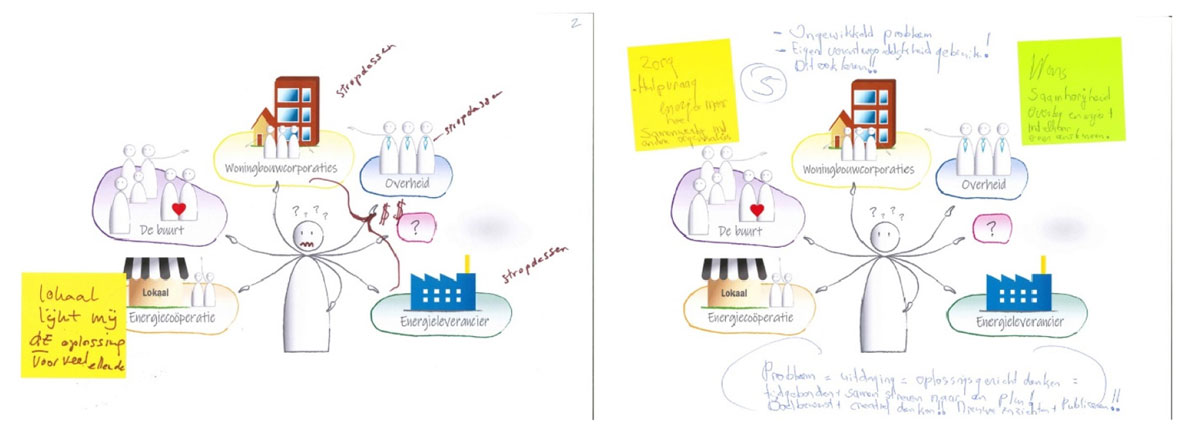
Figure 2: Examples of a used ‘procedural justice’ drawing in Enschede (left) and Zwolle (right).
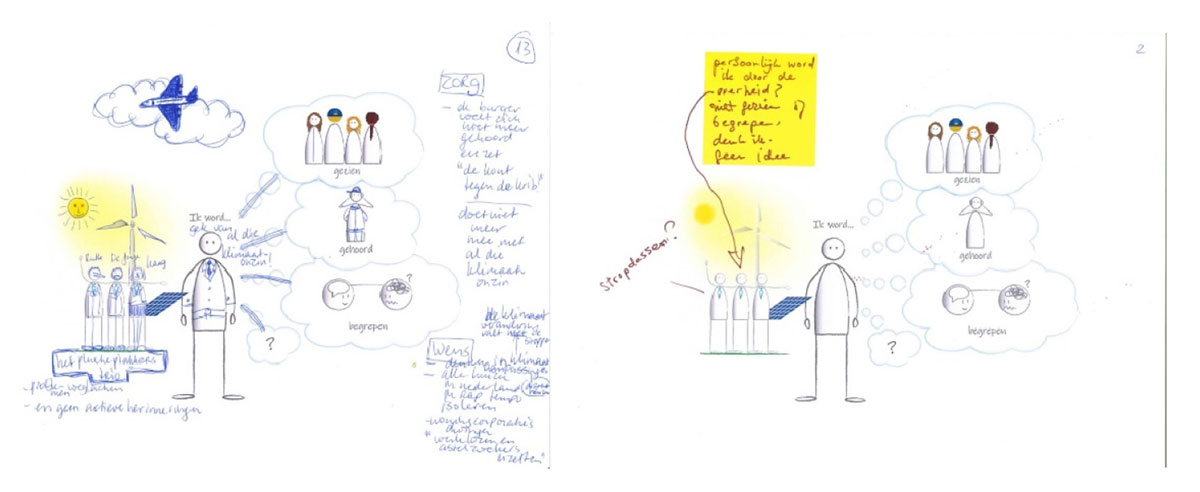
Figure 3: Example of used ‘recognition justice drawing’ in Deventer (left) and Enschede (right).
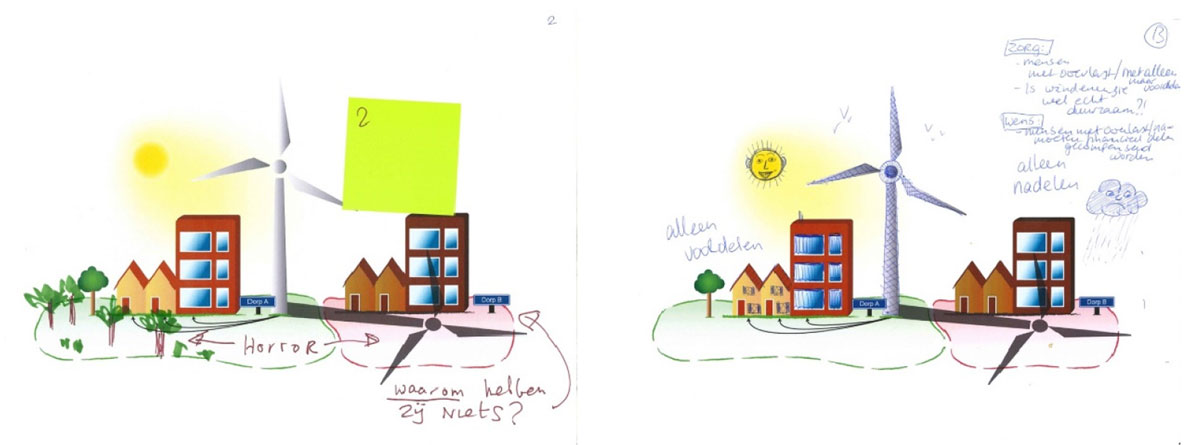
Figure 4: Example of used ‘distributional justice drawings’ in Enschede (left) and Deventer (right).
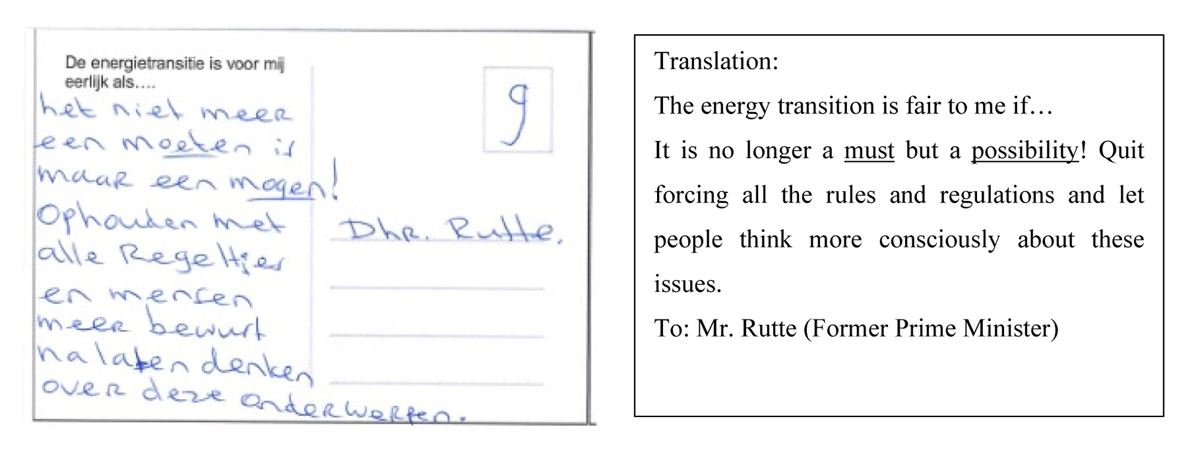
Figure 5: Example of a postcard.
While the round with selected images and clippings induced stories that included sympathy for the other, in this round we observed participants strongly framing the problems from their own position without referring to ‘the other’. ‘I also see a lot of opportunities. I can insulate my own house. But is that a wise choice?’ Or: ‘When I look at my own picture, am I being seen, am I being heard, am I being understood? I don’t think so’. Surprisingly, when talking about needs or solutions, participants barely spoke about problems or solutions needed for their own situation but mainly discussed problems and solutions for citizens in ‘other’ situations than themselves.
Like in the selected round images, also when using drawings, a lack of transparency and mistrust was frequently raised, as we could already observe between the lines of earlier quotations. Additionally, a technical mistrust is expressed by a participant: ‘The best thing would be, that I could be sure that the power coming out of my socket is also green. The energy network is so opaque. It’s just a guess whether that wisp that comes out today comes from Russia, from Turkey or from your solar panels’. Transparency and mistrust are also discussed regarding the understanding of implemented policies and solutions: ‘My wish is clarity on who pays what, and on what the government is doing, as we don’t see what actually changes’.
Also, when using drawings during the sessions, participants complained about transparency in policy processes. Interestingly, participants did not uniformly assign blame. While they questioned the coherence of governmental decisions (e.g., energy surcharges going to high-income earners), they also showed empathy for policymakers, recognizing constraints of time, uncertainty, and political compromise: ‘It’s quite crooked, but also understandable. They had to make an energy plan in a month’. Yet another participant retorted, ‘They had other options. The planners knew the consequences. So this was a conscious choice’.
In summary, our results show that well-designed open-ended drawings are particularly suitable for problem definition of a complex problem in the lived realities of citizens.
Type III: geographical maps
In this round of the sessions, participants discussed geographical maps (see Methods section) that were displayed on screen in an interactive map or printed on a transparent foil. Three themes predominantly appeared from the analysis: dichotomic dialogue style, abstract perspectives, and giving meaning to numbers.
Using geographical maps, a notable shift in conversational dynamics was observed. Unlike previous formats that centered around personal storytelling, discussions when using maps often adopted a comparative frame, with participants positioning themselves in relation to others. This frequently manifested in dichotomous thinking, such as contrasts between ‘I’ and ‘them’. For instance, one participant expressed frustration over top-down policymaking, suggesting that intrinsic motivation would be more effective than imposed regulations: ‘I always find it so unfortunate that things [sustainable behavior] have to be arranged through policies. People should start seeing it for themselves. Otherwise, it will be imposed from above and then you get that polarisation again’ (Map: livability × health risks).
Participants also reflected on perceived unfairness in subsidy distribution, revealing underlying feelings of mistrust. In more detail, concerns were raised about individuals misusing grants, with skepticism extending to both fellow citizens and government oversight: ‘Sometimes you see people applying for a grant and then all at once there’s a big fat car in front of their door’ (Map: income × energy poverty). Here, participants advocated for more stringent monitoring to ensure subsidies serve their intended purpose. Spatial injustice was also discussed as a cumulative phenomenon, especially when participants highlighted disparities in access to renewable energy solutions. ‘If someone either has no money or has no place for solar panels on their own roof, then a municipality or a neighbor should provide them, or you can have it leased, for example’ (Map: average income × renewable energy projects). Different forms of justice are included in this expression. While the idea introduces solidarity, it also reaffirms power asymmetries by placing vulnerable citizens in dependent positions.
Compared to earlier discussed visual methods, map-based discussions tended to generate abstract, general reflections rather than anecdotal accounts. Participants often transitioned into a normative discourse, proposing value-based solutions. For example, one participant emphasized a return to nature as a guiding principle: ‘In the energy transition, nature should be central. People who are connected to nature feel better’ (Map: energy poverty × energy use). Nevertheless, these normative reflections were also anchored in the realities revealed by the data. Participants expressed surprise at counter-intuitive patterns—such as low energy use in high-poverty areas—suggesting that perceived (policy formulated) problems do not always align with actual data. And so, geographical maps also helped participants to analyze and better understand the current situation. Where the previous participant ended up in a normative suggestion, the following participant noticed a gap and turned that into an opportunity: ‘My concern is that apparently not everyone with money is consciously engaged in generating renewable energy’ (Map: income × renewable energy projects).
Specifically for the geographical maps, conversations also included discussions about giving meaning to numbers. In this category, more normative discussions appeared in light of energy justice. For example, what do we consider as a ‘fair’ amount of energy to be used per person, in light of recent developments that make people generate their own energy: ‘Because you can generate a lot, but if you use it all at the same time, then it’s not quite fair anymore. Because the person who can’t afford it, ends up with paying 25% extra or so’ (Map: average income × renewable energy projects). From a normative spatial angle, ‘Well, you get a bit of a skew then, because if you live in Rijssen; you have spare energy that you can sell. But if it’s a very densely populated municipality with low-rise buildings, where are you going to put your solar panels?’ (Map: average income × renewable energy projects). ‘What I see here, and what surprises me, is that precisely the areas, where there is a lot of energy poverty, are also low in consumption. So then you would say, that’s is not the location where the problem is at all’ (Map: energy poverty × average energy use). Like in the previous quotation, conversations appeared around whether the geographical map matched their expectations. One other participant shared, ‘Because it’s almost all rural. So you would say how is this possible? I find that very strange’.
A different type of conversation appeared when the conversation moved from interpreting the numbers toward considering what a ‘just’ map should look like. When participants discussed the ‘energy generation’ map combined with the ‘average energy consumption’ map, ideas of fairness expressed included a strong distributional component. The fair solution and anticipated ideal situation were framed as balance over (a) the different municipalities and (b) generated energy. Where in the previous conversations striving for balance/equality in terms of numbers was ideal, the conversation when using the ‘average income’ map with the ‘renewable energy’ map continued toward spatial implications. The areas where fewer burdens are experienced (in terms of landscapes, construction, biodiversity) could compensate for the areas that suffer from the installation of solar or wind parks. At the same time, participants discussing the ‘renewable energy’ map with the ‘average energy consumption’ map kept returning to the theme of skepticism toward the competence of political actors. Several participants questioned whether policymakers fully understood the technical and spatial implications of energy projects.
In sum, map-based discussions shifted participants from individual narratives to systemic critique and procedural and recognition justice, broadening the conversation to include structural, spatial, and institutional dimensions, hence the more distributional dimensions of energy justice.
Type IV: postcards
After 2.5 hours of deliberation within smaller groups, participants were asked to write a postcard with one key message ‘The energy transition is fair if ….’ and address this to a person (this could be anyone). The postcards mainly highlighted responsibilities and actions related to a specific actor. This information is specifically valuable in light of procedural justice, as it indicates by whom the energy transition should be organized and prioritizes what should be done first.
Our analysis started with looking at the addressed persons, as this indicates who is expected to undertake action (procedural justice). Participants addressed their postcards primarily to political figures, suggesting a continued belief in institutional responsibility for a just energy transition. Addressees ranged from EU-level actors (e.g., Timmermans, EC Commissioner) to national (e.g., Rutte (Prime Minister), Van der Plas (Political Party Leader)) and municipal representatives (e.g., councilors, aldermen). Notably, this reliance on political actors appears paradoxical, as earlier conversations also revealed deep-rooted mistrust toward governmental intentions and actions. Few postcards were directed to provincial authorities, and only a minority addressed society at large (future generations, unheard /unseen citizens, or the Dutch population), reflecting on earlier calls for individual accountability.
Content-wise, the key messages from the postcards could be divided into three main categories. First, anticipated inequality, framed within Dutch policy contexts, was a central concern. Participants expressed strong urgency regarding distributional justice, including calls for fair pricing, targeted support for vulnerable households, and equitable spatial placement of renewable infrastructure. These views reflected fears that the energy transition could provoke existing inequalities. Second, a category of messages emphasized individual responsibility, echoing earlier rounds. These participants advocated for behavioral change through education rather than regulation and for flexible participation options tailored to diverse capacities. Many stressed intrinsic motivation while acknowledging the supportive role of institutions or personal networks. The third and smaller category conveyed a global and cooperative outlook. These messages, aligned with distributional and recognition justice, emphasized planetary stewardship, inclusivity, and awareness of global inequities, particularly the disproportionate burdens borne by less privileged regions. These reflections illustrated a broader ethical and collective framing of energy justice beyond national borders. The postcard assignments address mostly procedural aspects of the transition. They specifically shed light on who citizens think should take action or is responsible to organize change, as well as what the essence of this action should or could be.
In Table 2, we summarize the themes deliberated by participants when talking about different materials and how these relate to three tenets of energy justice.
Table 2: Overview Themes Discussed in Mini-Publics with Four Different Sets of Visual Material and How These Relate to Three Dimensions of Energy Justice.
| Selected images | Drawings | Geographical maps | Postcard | |
| Distributional justice | Sympathy for the other | Meaning of numbers | Envisioned inequality | |
| Comparative/ dichotomic conversation | Relational world visions beyond stateborders | |||
| Procedural justice | Experienced agency | Organization of responsibilities | Discussing the consequents | Defining key figures |
| Understanding the logics behind decisions | Lack of transparency and mistrust | Describing actions and responsibilities | ||
| Understanding the logics behind decisions | ||||
| Recognition justice | (mis)trust | Positionality from own perspective (anecdotal storytelling) | Speaking in generalities | Intrinsically driven |
Discussion
Throughout this paper, we explored how different visual artifacts can support the deliberative process of creating energy justice within a regional context. Our findings highlight the value of visual tools for broadening participation, making abstract topics tangible, and helping participants with deeper reflection. Regardless of the potential observed in the analysis and before concluding remarks, we need to address four concerns about our recruitment and eventual group of participants in the mini-publics.
First, after the deliberation, citizens agreed upon an active role for citizens and supported the idea of citizens proposing renewable energy projects in their own region. As we invited energy cooperative members as a target audience to be present at the deliberations, this outcome might have a strong correlation to our recruitment strategy. Other participants may have never heard about energy cooperatives and their activities before. In this way, the process itself opened up new perspectives for participants and reshaped their ideas on how a just energy transition could be organized.
Second, although we deliberately aimed for a diverse group of participants, differences in background, communication styles, and familiarity with the topic remained visible. Much of the dialogue still depended on verbal expression, despite the integration of visual artifacts. Additionally, Hohenthal and Rinkinen (2026) found that in the context of the energy transition, the majority of energy transition maps are produced by dominant actors such as governmental authorities, energy companies, and researchers and are intended to advance specific objectives, including the promotion of particular energy solutions and the framing of the energy transition in terms of sustainability, energy security, or economic considerations. Smith (2022 in Ercan et al. (2022)) raised that it is at the heart of deliberations to recognize different ways of seeing the world and in the collective search for meaning. Our results challenge the idea that there could be deliberative methods that exclude speech. There is a need for additional tools such as written or digital contributions that allow participants to engage meaningfully without requiring verbal articulation. The postcard exercise proved helpful in this regard.
Third, following the critique of Huttunen et al. (2022) that many citizens do not have a meaningful opportunity to participate in sustainability transitions, we found that visual materials can both support and constrain deliberation. Well-designed visual materials helped set boundaries on which topics are discussed and encouraged participants to reflect on societal values. However, visuals also frame and limit discourse. If introduced in a top-down manner, they risk steering participants toward pre-scripted narratives. In our case, visual artifacts were co-developed with a partner organization specialized in design and were pre-tested, ensuring contextual fit. Yet, in many participatory processes, time and capacity for such preparation are limited, which can reduce the transformative potential of visual methods.
Fourth, there are questions of ownership and continuity to be resolved. Who initiates and sustains such reflective spaces as created in this study? Repeating the conclusions of Hendriks (2009) and Willis et al. (2022), it seems justifiable to conclude that current democratic systems and practices are failing to respond adequately to the (climate) crisis. However, our visual materials were specifically created to enhance conversations about underlying norms and values regarding (in)justices that are envisioned for the future, while no real (policy) decisions were at stake. Without integration into policy or decision-making, their impact risks being short-term. This underscores the importance of embedding such practices within institutional frameworks to ensure their democratic relevance.
In sum, visual artifacts could play a valuable role, particularly in the early phases of participatory processes, by exploring values, concerns, and responsibilities and spatial relations grounded in lived. Our findings suggest that visual artifacts can be especially valuable in the early stages of (energy-related) participatory processes. They help initiate broad, grounded discussions and make abstract themes tangible. While less useful in decision-making phases, creative visual exercises (like prioritization) can still guide criteria setting. For local decision-makers, for example, those who are responsible for meeting (inter)national goals in 2030, understanding the potential of dialogue via visual artifacts can enhance inclusivity and deliberative quality. Collaborating early with skilled facilitators and designers enables thoughtful integration of these methods, enhancing both the democratic legitimacy and practical outcomes of energy transition efforts.
Conclusion
At the start of this paper, we described the role of materials used in mini-publics convened to better explore justice dilemmas of citizens in the context of a regional energy transition. Throughout the paper, we aimed to explore whether visual materials contribute to different types of deliberation. From their lived experiences, participants expressed concerns, dilemmas, values, and understandings that go beyond availability and affordability of energy, or the costs and nuisances that renewables such as wind turbines or solar parks may cause.
Soft visual materials that are open-ended help induce conversations about aspects of procedural justice. For example, the selection of images and clippings allowed participants to narrate from an ipsative and anecdotal perspective. The selected images were suitable for exploring a topic in a broad context, including a more emotion-driven conversation. In addition, the drawings allowed participants then to convert the dialogue into more normative questions of (procedural) justice, which indicates that drawings are suitable materials for deliberations when the aim is to explore the lived experiences of citizens’ part in an energy transition.
The postcard materials induced conversations that mainly highlighted aspects of procedural justice. The postcard proved to be useful to explore the prioritization of actions and responsibilities as experienced by citizens.
The geographical maps led to more cognitive conversations about existing distribution of benefits and burdens (including and beyond energy issues) and to deliberations about aspects of distributional justice. However, this went beyond questions of energy distribution or energy prices, including more philosophical conversations about the meaning of numbers, distribution, and equality and equity.
The results also show that by using geographical maps, as they are frequently used in energy-participatory processes in the Netherlands, deliberations became more cognitive and policy-oriented and led to conversations about spatial injustices. The use of more open-ended visual materials, such as drawings and a collection of images and clippings that participants could choose from, induced storytelling among participants about concerns and values that were important to them with respect to the energy transition. It was remarkable that concerns for others living in energy poverty were expressed and that relations with other policy domains, like spatial planning, agriculture, or poverty, were made. These narratives by participants reveal a rather nuanced understanding of the complexity of energy decisions. They expressed a mutual understanding that decisions are needed to organize more renewable energy, and they expressed empathy for other perspectives and possible injustices beyond their self-interest.
Despite the limited number of mini-publics organized in our study, our insights indicate that the energy justice framework with three tenets of distributive, procedural, and recognition justice is too narrowly focused on energy systems, leaving existing spatial injustices undisclosed. In addition, the visual information provided by academic experts and professionals in participatory processes, as well as in decision-making and policy-making, can be broadened to include soft visualizations in order to deliberate and explore beyond distributive aspects of energy justice. More research is needed to see if the findings hold across different social and spatial contexts of the energy transition.
Appendix 1: Drawings
Notes
- Prior to the meetings, all moderators (research assistants, project partners, and local key figures who volunteered to moderate) followed a two-hour training given by the researchers to ensure consistency between all the sessions. ⮭
- The detailed script for organizing the workshops can be requested from the main author. ⮭
Competing Interests
The authors have no competing interests to declare.
References
Abelson, J., Forest, P.-G., Eyles, J., Smith, P., Martin, E., & Gauvin, F.-P. (2003). Deliberations about deliberative methods: Issues in the design and evaluation of public participation processes. Social Science & Medicine, 57(2), 239–251. http://doi.org/10.1016/S0277-9536(02)00343-X
Arreola, D. D., & Burkhart, N. (2010). Photographic postcards and visual urban landscape. Urban Geography, 31(7), 885–904. http://doi.org/10.2747/0272-3638.31.7.885
Boossabong, P. (2025). Empathetic policy design: Emotional engagement, inclusive space, and empowered deliberation. Berlin: Springer Nature. http://doi.org/10.1007/978-3-031-75002-1
Bråten, S. (1973). Model monopoly and communication: Systems theoretical notes on democratization. Acta Sociologica, 16(2), 98–107. http://doi.org/10.1177/000169937301600202
Broms, L., Wangel, J., & Andersson, C. (2017). Sensing energy: Forming stories through speculative design artefacts. Energy Research & Social Science, 31, 194–204. http://doi.org/10.1016/j.erss.2017.06.025
Daw, T. M., West, S., Downing, A., Nasiritousi, N., Lindell, M., Hahn, T., Karlsson, M., Snäll, T., & Lindvall, D. (2026). What role for deliberative minipublics in sustainability transformations? An emerging topic for sustainability science. Sustainability Science, 21(3), 1365–1381. http://doi.org/10.1007/s11625-025-01789-2
de Vries, M. O., Mouter, N., Metze, T. A. P., & Spruit, S. (2026). Who is listening? Comparing 7 cases of citizen participation at different levels of government in the Dutch energy transition. Energy Policy, 209, 114998. http://doi.org/10.1016/j.enpol.2025.114998
Ercan, S. A., Asenbaum, H., Curato, N., & Mendonça, R. F. (Eds.). (2022). Research methods in Deliberative democracy. Oxford, UK: Oxford University Press. http://doi.org/10.1093/oso/9780192848925.001.0001
Fiorino, D. J. (1990). Citizen participation and environmental risk: A survey of institutional mechanisms. Science, Technology, & Human Values, 15(2), 226–243. http://doi.org/10.1177/016224399001500204
Haarbosch, S., Kloppenburg, S., Van Vliet, B., & Metze, T. (2026). Exploring the spatial dynamics of a just regional energy transition: What if we ask citizens? Environmental Policy and Governance, 36(2), 240–252. http://doi.org/10.1002/eet.70044
Haarbosch, S. W., Kaufmann, M., & Veenman, S. (2021). A mismatch in future narratives? A comparative analysis between energy futures in policy and of citizens. Frontiers in Sustainable Cities, 3. http://doi.org/10.3389/frsc.2021.654162
Hendriks, C. M. (2009). Policy design without democracy? Making democratic sense of transition management. Policy Sciences, 42(4), 341–368. http://doi.org/10.1007/s11077-009-9095-1
Hoffman, J. (2013). Theorizing power in transition studies: The role of creativity and novel practices in structural change. Policy Sciences, 46(3), 257–275. http://doi.org/10.1007/s11077-013-9173-2
Hohenthal, J., & Rinkinen, J. (2026). Maps in the service of sociotechnical imaginaries of energy transition. Geoforum, 170, 104543. http://doi.org/10.1016/j.geoforum.2026.104543
Huttunen, S., Ojanen, M., Ott, A., & Saarikoski, H. (2022). What about citizens? A literature review of citizen engagement in sustainability transitions research. Energy Research & Social Science, 91. http://doi.org/10.1016/j.erss.2022.102714
Jenkins, K., McCauley, D., Heffron, R., Stephan, H., & Rehner, R. (2016). Energy justice: A conceptual review. Energy Research & Social Science, 11, 174–182. http://doi.org/10.1016/j.erss.2015.10.004
Kaplan, I., & Howes, A. (2004). ‘Seeing through different eyes’: Exploring the value of participative research using images in schools. Cambridge Journal of Education, 34(2), 143–155. http://doi.org/10.1080/03057640410001700534
Lawhon, M., & Murphy, J. T. (2012). Socio-technical regimes and sustainability transitions:Insights from political ecology. Progress in Human Geography, 36(3), 354–378. http://doi.org/10.1177/0309132511427960
Levenda, A. M., Behrsin, I., & Disano, F. (2021). Renewable energy for whom? A global systematic review of the environmental justice implications of renewable energy technologies. Energy Research & Social Science, 71, 101837. http://doi.org/10.1016/j.erss.2020.101837
Mansbridge, J., Bohman, J., Chambers, S., Christiano, T., Fung, A., Parkinson, J., Thompson, D. F., & Warren, M. E. (2012). A systemic approach to deliberative democracy. In J. Parkinson & J. Mansbridge (Eds.), Deliberative Systems: Deliberative democracy at the large scale (pp. 1–26). Cambridge, UK: Cambridge University Press. http://doi.org/10.1017/CBO9781139178914.002
Meesters, M. E., Turnhout, E., & Behagel, J. H. (2023). Negotiating salt worlds: Causation and material participation. Critical Policy Studies, 17(2), 297–315. http://doi.org/10.1080/19460171.2022.2078731
Metze, T. (2020). Visualization in environmental policy and planning: A systematic review and research agenda. Journal of Environmental Policy & Planning, 22(5), 745–760. http://doi.org/10.1080/1523908X.2020.1798751
Metze, T. A. P., van den Broek, J., van Est, R., & Cuppen, E. H. W. J. (2023). Participatory repertoires for aligning policy and society: An analysis of Dutch stakeholder views on deep geothermal energy. Energy Research & Social Science, 98, 103019. http://doi.org/10.1016/j.erss.2023.103019
Morrison, C., & Dearden, A. (2013). Beyond tokenistic participation: Using representational artefacts to enable meaningful public participation in health service design. Health Policy, 112(3), 179–186. http://doi.org/10.1016/j.healthpol.2013.05.008
Nærland, T. U., & Engebretsen, M. (2023). Towards a critical understanding of data visualisation in democracy: A deliberative systems approach. Information, Communication & Society, 26(3), 637–655. http://doi.org/10.1080/1369118X.2021.1968922
Oliver, S. R., Rees, R. W., Clarke-Jones, L., Milne, R., Oakley, A. R., Gabbay, J., Stein, K., Buchanan, P., & Gyte, G. (2008). A multidimensional conceptual framework for analysing public involvement in health services research. Health Expectations, 11(1), 72–84. http://doi.org/10.1111/j.1369-7625.2007.00476.x
Prins, A., & van der Belt, R. (2020). Eis de regio op: Regionale democratie in de energietransitie. B. Maatschappij, 45, 335–352. http://doi.org/10.5553/BenM/016571942020045004004
Ryan, M., & Smith, G. (2014). Defining mini-publics. In K. Grönlund, A. Bächtiger, & M. Setälä (Eds.), Deliberative mini-publics: Involving citizens in the democratic process (pp. 9–26). Colchester: ECPR Press.
Sanders, L. (1997). Against deliberation. Political Theory, 25(3), 347–376. http://doi.org/10.1177/0090591797025003002
Smith, G. (2009). Democratic innovations: Designing institutions for citizen participation. Cambridge, UK: Cambridge University Press. http://doi.org/10.1017/CBO9780511609848
Spaa, A., Spencer, N., Durrant, A., & Vines, J. (2022). Creative and collaborative reflective thinking to support policy deliberation and decision making. Evidence & Policy, 18(2), 376–390. http://doi.org/10.1332/174426421x16474564583952
Stirling, A. (2008). “Opening up” and “closing down”:power, participation, and pluralism in the social appraisal of technology. Science, Technology, & Human Values, 33(2), 262–294. http://doi.org/10.1177/0162243907311265
Van Duren, M., Mengerink, J., & van de Ven, D. (2022). Houding en gedrag inwoners van Overijssel ten aanzien van de energietransitie. Het PON & Telos. Retrieved from https://edepot.wur.nl/711172
van Uffelen, N. (2022). Revisiting recognition in energy justice. Energy Research & Social Science, 92, 102764. http://doi.org/10.1016/j.erss.2022.102764
van Veelen, B., & van der Horst, D. (2018). What is energy democracy? Connecting social science energy research and political theory. Energy Research & Social Science, 46, 19–28. http://doi.org/10.1016/j.erss.2018.06.010
Wenger, E. (1998). Communities of practice: Learning as a social system. Systems thinker, 9(5), 2–3.
Willis, R., Curato, N., & Smith, G. (2022). Deliberative democracy and the climate crisis. WIREs Climate Change, 13(2), e759. http://doi.org/10.1002/wcc.759