
Introduction
In recent years, deliberative minipublics have come to the fore both in scholarly debates and practical applications (OECD 2020; van der Does & Jacquet 2023). These minipublics bring together a randomly invited subset of citizens to learn, deliberate and advise on a political issue (Curato et al. 2021; Smith & Setälä 2018)1—thereby aiming to put into practice (deliberative) democratic ideals of political equality, inclusiveness, mutual respect and reason-giving, amongst others (Bächtiger et al. 2018; Dryzek et al. 2019; Farrell & Stone 2020). The increased popularity of minipublics is often considered to stem from their potential to address (perceived) deficiencies in the existing political system and, thereby, alleviate widespread dissatisfaction with representative democracy (Boulianne 2018; Dryzek et al. 2019; Jacobs & Kaufmann 2021; OECD 2020; van Dijk & Lefevere 2023; Vrydagh 2023; Werner & Marien 2018).2
What do citizens who are discontented with present-day democracy think about the introduction of minipublics? This is key if minipublics are to address widespread dissatisfaction with present-day politics; it is hard to see how they can do so if they only appeal to citizens who are already happy with the status quo and not to those who are disenchanted with today’s democracy. Arguably, it is discontented citizens for whom democratic decision-making is often reformed in the first place.
The existing studies to date suggest that discontented citizens are in favour of minipublics that are empowered to decide directly on the issue(s) at stake (Bedock & Pilet 2021; Garry et al. 2022; Pilet et al. 2023). Indeed, they are particularly supportive of binding minipublics and tend to prefer these over advisory ones that formulate recommendations that feed into political decision-making (Bedock & Pilet 2023; Goldberg & Bächtiger 2023). However, it is unclear what this signifies. Are discontented citizens only in favour of tools that deviate from or circumvent the existing political system, or do they also support those that work in tandem with today’s representative structures? This latter is, however, of major relevance; it is in an advisory capacity that minipublics are typically organised nowadays (Curato et al. 2021; Paulis et al. 2021; Setälä 2017). We are thus left wondering: How do discontented citizens think about advisory minipublics? And what would they want to happen after minipublics have formulated their recommendations?
This paper adds to this ongoing line of research in two ways. It takes stock of public support for advisory minipublics, and it examines whether and to what extent this support is higher among citizens who are disenchanted with present-day politics. To do so, this paper not only uses the general notion of dissatisfaction with the functioning of representative democracy, but also develops and uses a more comprehensive measurement of political discontent consisting of citizens’ appraisals of politicians, processes and policies. It draws on data from Belgium (n = 5901); a country in which only a limited number of minipublics were previously organised on the national level (Paulis et al. 2021). The findings indicate that support for advisory minipublics is fairly high on average and indeed related to general dissatisfaction with democracy’s functioning and, even more so, to the more elaborate measurement of political discontent. This suggests that discontented citizens are (also) in favour of advisory minipublics that function as additions to—rather than replacements for—the existing system.
Moreover, this paper also asks what citizens want to happen after minipublics have formulated their advice, and whether this differs depending on their (dis)contentment with the status quo. After all, the advisory nature of minipublics implies that political elites are left with the possibility of disregarding the recommendations if these do not suit them well; this almost seems to be the rule rather than the exception (Arnold 2022; Font et al. 2018; OECD 2020). It also means that the advice of minipublics constitutes one source of input to the broader process of political decision-making, potentially giving rise to tensions and clashes with other viewpoints and interests (e.g., those of politicians, organisers, activists, lobbyists, interest groups and experts; Parry, Curato & Dryzek 2023; Vrydagh & Caluwaerts 2023). A follow-up study from Belgium (n = 1748) suggests that both discontented and contented citizens do not want minipublics to be organised just for the sake of it. Rather, they want elected representatives to be responsive by justifying their course of action and by considering minipublics’ recommendations when making political decisions—although they seem rather undecided on whether these recommendations should be directly implemented and/or prevail over government plans, democratic norms or public opinion.
Overall, this paper makes several contributions. First, it goes beyond existing studies that look at support for binding minipublics that shift decision-making power away from politicians and, thereby, circumvent existing representative structures (e.g., Pilet et al. 2023). Instead, this paper adds to a better understanding of how citizens think about advisory minipublics that function alongside today’s political system. Specifically, it builds on and advances the argument that discontented citizens may have distinct views on minipublics and their role in decision-making—and that this is crucial to investigate in assessing whether advisory minipublics are a suitable response to widespread disenchantment with the representative political system (e.g., Goldberg & Bächtiger 2023). Second, this paper proposes and implements a fine-grained analytical approach. It develops a more comprehensive measurement of political discontent as well as a more nuanced approach to gauging citizens’ perspectives on the function of advisory minipublics in our political system. Third, in doing so, this paper advances the debate on advisory vs. binding minipublics. Rather than presenting this as a binary option, it takes a step towards recognising the real-world complexities of instances where minipublics advise but politicians decide. For instance, it improves our understanding of what discontented citizens think should happen when there is tension or conflict between what minipublics want and what elected representatives do. As such, this paper offers novel insights into discontented citizens’ perspectives on advisory minipublics and their uptake in political decision-making.
Theoretical Framework
Literature review
In recent years, deliberative minipublics have become a widely discussed and increasingly used tool for involving citizens in political decision-making (Theuwis, van Ham & Jacobs 2021; van der Does & Jacquet 2023). This popularity can (partly) be explained by a promising picture of minipublics’ potential to address widespread disenchantment with present-day democracy—among scholars (Boulianne 2018; Jacobs & Kaufmann 2021; van Dijk & Lefevere 2023; Werner & Marien 2018) and practitioners, politicians and policymakers (Fung 2015; Macq & Jacquet 2023; OECD 2020; Vrydagh 2023). Notably, Vrydagh (2023: 10) highlights an ‘ambitious image of minipublics, presenting them as a way to tackle […] the broader democracy crisis’ among organisers of minipublics. But how do citizens who are discontented with present-day democracy think about minipublics? After all, it is those discontented citizens for whom minipublics are introduced in the first place, and who are anticipated to positively adjust their appraisal of democratic decision-making in return.
In the scholarly debate, there has been an upsurge in empirical studies that focus on minipublics (van der Does & Jacquet 2023). The existing body of research indicates that members of the general public are, on average, fairly supportive of the use of minipublics (e.g., Pilet et al. 2023). At the same time, it also suggests that support for minipublics is not uniform across society and, in particular, is higher among those who are dissatisfied with the existing political system (Bedock & Pilet 2021; Bedock & Pilet 2023; den Ridder, Fiselier & van Ham 2021; Gherghina & Geißel 2020; Jacquet, Niessen & Reuchamps 2022; Pilet et al. 2023; Talukder & Pilet 2021). Yet, this previous research often depicts minipublics as having binding prerogatives (Bedock & Pilet 2021; Garry et al. 2022; Pilet et al. 2023) or fails to specify their role in political decision-making (Gherghina & Geißel 2020; Jacquet, Niessen & Reuchamps 2022; Walsh & Elkink 2021). For instance, Bedock and Pilet (2021: 491) ask about support for ‘citizens selected by lot’ who are given ‘the central role in deciding what is best for the country’.
Despite empirical research on support for minipublics with a binding mandate, this format has mostly remained a thought experiment (see Gerwin 2018 for exceptional cases of minipublics having a binding impact). Rather, the vast majority of minipublics to date take on an advisory role—thereby also varying in the extent to which they are connected to formal decision-making structures (e.g., minipublics may be initiated by the government or by civil society; Curato et al. 2021; OECD 2020) and have an actual impact on policy-making (Arnold 2022; Font et al. 2018; Vrydagh & Caluwaerts 2023).3 It is thus of major relevance to understand how discontented citizens think about minipublics in an advisory role; it is in this capacity that minipublics typically unfold in practice (Curato et al. 2021; Paulis et al. 2021; Setälä 2017).4
We know surprisingly little about public support for minipublics in an advisory capacity and, in particular, whether and to what extent they appeal to citizens who are discontented with the status quo of representative politics. The reason is twofold. First, previous studies indicate that the general public has a preference for advisory minipublics over binding ones (Bedock & Pilet 2023; Garry et al. 2022; Goldberg 2021; Goldberg & Bächtiger 2023; Renwick et al. 2022; Rojon, Rijken & Klandermans 2019). For instance, Renwick et al. (2022) report that around half of the citizens in the United Kingdom are in favour of minipublics that advise parliament or that are accompanied by a referendum; only a third is supportive of minipublics whose recommendations automatically become law. It, however, seems that this preference is reversed for discontented citizens; they tend to favour binding over advisory minipublics (Bedock & Pilet 2023; Goldberg & Bächtiger 2023). Yet, it is hard to derive conclusions about whether discontented citizens are merely less or, alternatively, not at all supportive of minipublics in an advisory capacity.
A second reason for our limited understanding is that the few existing studies on support for advisory minipublics among discontented citizens yield mixed findings. Den Ridder, Fiselier and van Ham (2021) report that those who are dissatisfied with democracy are more favourable towards the use of advisory minipublics in the Netherlands (for similar conclusions from the United Kingdom and Belgium, see Gherghina & Geißel 2020; Talukder & Pilet 2021, respectively). In contrast, Goldberg and Bächtiger (2023) find that support for advisory minipublics is lower among discontented citizens in Germany. Yet, Walsh and Elkink (2021) do not find support for their hypothesis that dissatisfaction fuels support for advisory minipublics in Ireland (see also Bedock & Pilet 2023 for Belgium). As such, the limited empirical scrutiny of support for advisory minipublics and its relation to political discontent is inconclusive. Taken together, it remains largely unclear to what extent citizens support the use of deliberative minipublics in an advisory capacity and, in particular, to what extent this support is higher among those who are discontented with the status quo of representative politics.
Ex-ante support for advisory minipublics among discontented citizens
To theorise about support for advisory minipublics among discontented citizens, I start from the theoretical approaches commonly used in existing works on this topic (e.g., Bedock & Pilet 2023; Talukder & Pilet 2021; Walsh & Elkink 2021). To begin with, the New Politics thesis argues that postmaterialist citizens highly value and prioritise political participation (Inglehart 1997) and possess the necessary resources and skills to take up an active political role (Dalton 1984). Yet, at the same time, these same citizens have become less allegiant to authority and more critical of democratic performance; the literature labels them as ‘dissatisfied democrats’ (Klingemann 2014), ‘assertive citizens’ (Welzel & Dalton 2014) or ‘critical citizens’ (Norris 2011). This theoretical approach thus suggests that support for more citizen involvement, such as minipublics, is particularly high among those who are discontented with representative democracy.
In turn, the stealth democracy thesis asserts that citizens do not really desire to be personally engaged with politics and, instead, want politicians to do their job without having to monitor or interfere continually (Caramani 2017; Hibbing & Theiss-Morse 2002). However, citizens do become motivated to become politically involved if they perceive the existing political system to perform poorly (Hibbing & Theiss-Morse 2002; Medvic 2019). Accordingly, public support for more participatory processes is understood to be triggered by disenchantment with representative democracy—that is, by a sense that it is necessary to keep representatives in check and to correct their conduct throughout the electoral cycle. Hence, the stealth democracy thesis also indicates that support for more citizen involvement, such as minipublics, is higher among those who are discontented with present-day politics.
In line with existing works, I rely on the notion of dissatisfaction with democracy’s functioning as a general measurement of political discontent (e.g., den Ridder, Fiselier & van Ham 2021; Talukder & Pilet 2021). As such, I expect that support for the use of advisory minipublics is higher among those who are discontented with democracy’s functioning in general. Therefore, I hypothesise: The more citizens are discontented with the general functioning of democracy, the more they are supportive of advisory minipublics (H1).
Yet, it is debated what such general notions of dissatisfaction with democracy’s functioning can actually tell us (Linde & Ekman 2003; Valgarðsson & Devine 2022). In this regard, it remains unclear what citizens think of when asked to what extent they are satisfied with the ‘way democracy works’ in their country—and it may tap into various dimensions of support, including support for incumbent authorities, for democratic processes, for the outputs of the system, or for the system as a whole (Linde & Ekman 2003; Martini & Quaranta 2020). This is, for instance, evidenced by differences between surveys in this (dis)satisfaction measurement within countries and its potential consequences when studying its relationship with other variables (Valgarðsson & Devine 2022). As such, general notions of discontent with democracy’s functioning may be too broad and may reflect different concerns about today’s political system.
In response to these concerns, I go beyond this single indicator and, instead, take a step towards a more comprehensive measurement of political discontent (Jennings, Stoker & Twyman 2016; Linde & Ekman 2003), and relate it to support for advisory minipublics (Werner, Marien & Felicetti 2020). More specifically, I take into account citizens’ evaluations of the policies they receive, the processes by which these policies are developed and the politicians who make them (Ulbig 2002). In doing so, I also theorise as to whether and why citizens who are discontented with policies, processes and/or politicians may be more supportive of the use of advisory minipublics.
First, many people think that politicians are disconnected from the important problems facing the world today and are short-sighted, self-serving and power-hungry (Jennings, Stoker & Twyman 2016; Pew Research Center 2019). In turn, citizens may think of deliberative minipublics as addressing these concerns by altering who is involved in political decision-making. Minipublics are designed to reflect a broad diversity and plurality of the population (Curato et al. 2021; Farrell & Stone 2020), and the wider public may perceive its participants to have similar concerns and viewpoints—especially more so than politicians (Pow, van Dijk & Marien 2020). Hence, I expect that the use of advisory minipublics is particularly appealing to citizens who are discontented with elected politicians.
Second, many citizens feel that their concerns and interests are neither heard nor listened to in the process through which policies are made (de Fine Licht, Agerberg & Esaiasson 2022; Dommett & Temple 2019; Neblo, Esterling & Lazer 2018). The use of minipublics could create a sense that citizens will be taken seriously and their views are openly considered in the process of political decision-making (Werner & Marien 2018). As such, citizens may see minipublics as making the political process more transparent and more receptive to citizens’ input. Accordingly, I expect that support for minipublics is higher among those who are discontented with current political processes.
Third, many citizens believe that politics fails to deliver policies that are in societal interest (Dommett & Temple 2019; Jennings, Stoker & Twyman 2016). It is, however, far from clear whether minipublics in an advisory capacity bring about actual change to political decision-making (Arnold 2022; Font et al. 2018; OECD 2020). At the same time, citizens may foresee minipublics to have an impact on decision-making and feel that they can improve political outputs—for instance, that minipublic participants come up with ideas and policy recommendations that are less dominated by special interests and more in line with the public interest (Fishkin 2018; Vrydagh & Caluwaerts 2023). Hence, I expect support for advisory minipublics to be higher among those who are more discontented with present-day policies.
Taken together, this allows me to formulate the following additional hypotheses: The more citizens are discontented with politicians (H2), processes (H3) and/or policies (H4), the more they are supportive of advisory minipublics.
Ex-post preferences for minipublics’ uptake among discontented citizens
While it could thus well be that discontented citizens are (also) in favour of advisory minipublics before they take place, much less is known about what they would like to happen after a minipublic has formulated its advice. Previous work indicates that citizens want minipublics to be consequential, that is, they prefer minipublics to have a meaningful influence in political matters (Curato & Niemeyer 2013; Garry et al. 2022; Jacquet 2019). Yet, it remains largely unclear what this should look like according to them, and whether and how this differs for discontented citizens.
To understand whether, how and when (discontented) citizens want minipublics to have an impact on political decision-making, it is relevant to turn to the concept of democratic responsiveness. This can be defined as elected representatives ‘paying attention to citizens’ wishes and demands’ (Esaiasson, Gilljam & Persson 2017: 740)—and is often narrowed down to denote ‘politicians [who] adopt policies that citizens indicate they prefer’ (ibid, p. 742; see also Powell 2009). Yet, the adoption and implementation of minipublics’ advice is only one manifestation of democratic responsiveness; there is more than one way for citizens’ input to be taken up in the political arena. As argued by Esaiasson, Gilljam & Persson (2017), elected representatives can also respond by listening to citizens’ input and/or explaining the reasoning behind political decisions (see also Esaiasson & Wlezien 2017). Therefore, I ask: To what extent do citizens want elected representatives to respond to the advice of minipublics by (a) justifying their course of action, (b) taking it into consideration in decision-making or (c) implementing it directly (RQ1)?
Moreover, tensions may occur between minipublics’ recommendations and the norms or preferences of other actors (Bedock & Pilet 2023; Parry, Curato & Dryzek 2023). An often-mentioned example is the situation in which minipublics’ recommendations are at odds with government plans or existing policies (e.g., Font et al. 2018; Vrydagh & Caluwaerts 2023). However, the advice of minipublics may be at odds not only with government plans but also with democratic norms (Lafont 2020) or public opinion (Warren & Pearse 2008), for instance. Hence, I additionally ask: To what extent do citizens want the advice of minipublics to prevail over other inputs—that is, over (a) government plans, (b) democratic norms or (c) public opinion (RQ2)?
Finally, the preferred impact of minipublics may not be uniform and may, again, vary across different subgroups in society. Earlier works report that dissatisfied citizens, in particular, are more supportive of binding forms of minipublics compared to their satisfied counterparts (Bedock & Pilet 2021; Bedock & Pilet 2023; den Ridder, Fiselier & van Ham 2021; Goldberg & Bächtiger 2023; Pilet et al. 2023). As such, citizens who are discontented with present-day democracy may wish for minipublics to be consequential, especially when the advice challenges the status quo. At the same time, satisfied citizens may prefer the existing political system to remain as it is and, therefore, may not want minipublics to have an impact. In this paper, however, it is not binding minipublics but the subsequent uptake of advisory minipublics that is scrutinised. Discontented citizens may, in any event, have little faith in the existing political system to act responsively to advisory minipublics. They may also believe that the perceived deficiencies of today’s democracy can only be addressed by radical, rather than incremental, changes to the political system. As such, it is not clear if and how discontented citizens have distinct preferences with regard to minipublics’ uptake in decision-making. Hence, I ask: To what extent do citizens’ preferences on the uptake of minipublics’ advice vary depending on their appraisal of the existing political system (RQ3)?
Study 1
Data and methods
In Study 1, I empirically investigate the extent to which support for advisory minipublics is higher among discontented citizens—both for the general and specific measurements of political discontent (H1–H4). To do so, I use data from the pre-electoral wave of the 2019 Belgian Election Study (BES), collected by the survey-sampling company Kantar between April and May 2019, and with quotas set for sex, age, education level and region. A comparison of the analytical sample (n = 5901)5 and the Belgian population can be found in Appendix Table A1.
The dataset includes a measurement of support for advisory minipublics. Presuming that many people are not familiar with minipublics, it was briefly explained that a minipublic consists of 30–50 citizens selected at random who come together to discuss a certain topic and formulate advice to Parliament. Next, respondents were asked: ‘In general, are you in favour or against the organisation of advisory citizen forums on important national issues?’, whereby the answer options ranged from 0 meaning ‘Strongly against’ to 10 ‘Strongly in favour’.
As for political discontent, the dataset includes both general and specific items. To tap into general notions of dissatisfaction with representative democracy, respondents were asked: ‘Overall, are you rather satisfied or rather dissatisfied with the way democracy works in Belgium?’. This was measured on a scale ranging from 1 ‘Very satisfied’ to 5 ‘Very dissatisfied’.
More specific items on political discontent were formulated as follows. First, discontent with elected politicians was measured by asking respondents the extent to which they think that politicians are corrupt, competent, trying to keep promises, and lacking an understanding of societal issues. These items were asked on a five-point Likert scale from 1 meaning ‘Strongly disagree’ and 5 ‘Strongly agree’. Second, respondents’ appraisal of political processes was measured by asking them to indicate the extent to which they believe the political system is fair, efficient and transparent. These items were asked on a similar five-point Likert scale. Finally, three items were used to tap into respondents’ attitudes towards policies. Respondents were asked the extent to which they think policies are a good reflection of public preferences, again on a five-point Likert scale. Besides, respondents were asked the extent to which they are satisfied with the policies implemented by the federal government in the past few years, and how likely they think they are to agree with the decisions of the federal government in the next five years. These two questions on past and future policies were asked on eleven-point scales. The positively phrased items were reverse-coded to denote discontent. To enhance the comparability of the measures, I normalised the items to a 0 (min) to 1 (max) scale.
I use structural equation modeling (SEM). I control for respondents’ sex, age, education level, region, political interest and vote intention. All item formulations and descriptive statistics are included in Appendix Table A2. I report a complete-case analysis (list-wise deletion), in which ‘don’t know’ responses are treated as missing values.
Results
To begin with, I look at the various notions of political discontent—that is, at the relationship between the specific notions of discontent as well as its association with general dissatisfaction with democracy’s functioning. I observe that the notions of discontent with politicians, processes and policies share a sizable common component (std. covariances ≥0.826; Appendix Tables A3–A4). In fact, the higher-order factor of general discontent is able to explain more than 80% of the variation of each of the lower-order factors of discontent with politicians, processes and policies (standardised factor loadings ≥0.904; Appendix Table A5). Besides, this higher-order factor of general discontent is closely related to respondents’ dissatisfaction with democracy’s functioning (std. covariance = 0.731; Figure 1).
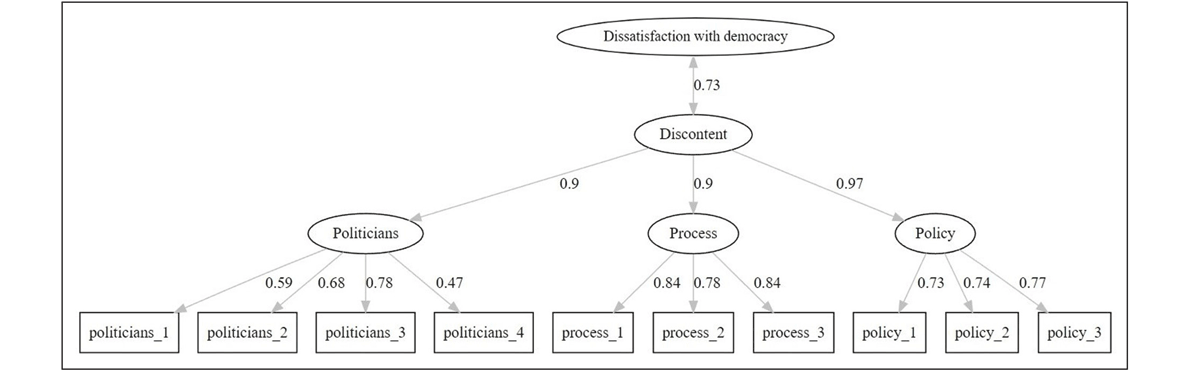
Figure 1: SEM of higher-order discontent and its relation to dissatisfaction with democracy’s functioning.
Note: Model displays standardised factor loadings of observed and latent constructs of discontent, and its covariance with dissatisfaction with democracy’s functioning. The full table can be found in Appendix Table A6.
Next, I examine the link between these different sources of discontent and respondents’ support for advisory minipublics. First, I observe a positive and statistically significant association between respondents’ general dissatisfaction with democracy’s functioning and their support for advisory minipublics. In line with the first hypothesis, the more respondents are discontented with the way democracy currently works in general, the more they are in favour of minipublics in an advisory capacity (Table 1; Model 1).
Table 1: Summary of models predicting support for minipublics.
| Support for minipublics | ||||||
| Model 1 | Model 2 | Model 3 | ||||
| Std. est. | p-value | Std. est. | p-value | Std. est. | p-value | |
| Dissatisfaction with democracy | 0.035 | 0.014 | ||||
| Discontent (higher-order) | 0.087 | <0.001 | ||||
| Politicians (lower-order) | 0.282 | <0.001 | ||||
| Processes (lower-order) | 0.164 | <0.001 | ||||
| Policies (lower-order) | –0.358 | <0.001 | ||||
Note: Standardised estimates of support for minipublics on various notions of discontent. All models include controls for sex, age, education level, region, vote intention and political interest. Full models can be found in Appendix Tables A7–A9.
Here, it is important to emphasise that these findings do not necessarily indicate that those who are contented with democratic performance are not supportive of minipublics, but merely that they are less so. For instance, respondents who are most satisfied with democracy’s functioning still seem rather supportive of minipublics—with the predicted mean above the midpoint (M = 0.675; 95%CI [0.661; 0.690] among the very satisfied as compared to M = 0.706; 95%CI [0.693; 0.718] among the very dissatisfied respondents).
Second, I consider the higher-order factor of political discontent. Similarly, I observe that the more respondents are politically discontented, the more they are supportive of advisory minipublics (Table 1; Model 2). Interestingly, the standardised association between the higher-order discontent factor and support for advisory minipublics is more than twice as large as the latter’s association with dissatisfaction with democracy’s functioning. This suggests an added value of moving beyond general dissatisfaction with democracy’s functioning as a sole indicator of political discontent.
Third, I relate respondents’ evaluations of politicians, processes and policies separately to their support for minipublics (Table 1; Model 3).6 When doing so, I find that the more respondents are discontented with politicians and processes, the more they are in favour of advisory minipublics. Yet, I observe the opposite for discontent with policies. This corroborates the second and third, but not the fourth, hypothesis. It is, however, important to note that it hardly occurs that respondents are discontented with a specific source but not the others. This is evidenced by the high covariance between the lower-order constructs of discontent (Appendix Tables A3–A5). As such, we should be careful in drawing conclusions from the findings on the separate associations between support for advisory minipublics and specific sources of discontent. After all, while providing a more comprehensive measurement of political discontent when taken together, the high covariances make it difficult to empirically separate discontent with one source from discontent with another.
All in all, I observe that support for advisory minipublics is fairly high on average, yet more pronounced among those who are discontented with present-day politics. This holds for the general measure of dissatisfaction with democracy’s functioning and, even more so, for the more comprehensive measurement of political discontent (that consists of discontent with today’s politicians, processes and policies). As such, I find that discontented citizens are more supportive of minipublics in an advisory capacity than their contented counterparts.
Study 2
Data and methods
What would (discontented) citizens like to happen after minipublics have formulated their recommendations? In Study 2, I draw on additional data from Belgium collected between October and November 2021. This cross-sectional survey was again fielded by the survey-sampling company Kantar with quotas set for sex, age, education level and area of residence. A comparison of the analytical sample (n = 1748) and the Belgian population can be found in Appendix Table B1.
The survey items on the preferred uptake of minipublics are preceded by a short description of these tools. Again, presuming that many people are not familiar with minipublics, it was briefly explained that a minipublic consists of 20–150 citizens selected at random who come together to learn from experts, discuss a certain topic and formulate advice to Parliament.
To gauge what respondents would like to happen afterwards, the survey included two sets of questions. First, the preferred uptake of minipublics was measured with the following question: ‘If the government decides to organise a citizens’ forum then the government should… a) justify why it does or does not follow the recommendations of the citizens’ forum; b) consider the recommendations of the citizens’ forum when making political decisions; and c) exactly implement the recommendations of the citizens’ forum’. Second, the conditionality of the preferred uptake was measured by asking respondents to indicate to what extent they agreed with the following statements: ‘The government has to implement the recommendations of the citizens’ forum if the recommendations are at odds with… a) the government plans; b) democratic norms such as respect for minorities; and c) public opinion’. Both batteries were measured on a Likert scale ranging from 1 ‘Strongly disagree’ to 5 ‘Strongly agree’, and don’t know responses were coded as missing values.
To explore if and how the preferred uptake minipublics is different for discontented citizens, I again draw on a general measurement of dissatisfaction with the functioning of democracy (e.g., ESS Round 10, 2022). The question was formulated as follows: ‘Overall, are you rather satisfied or rather dissatisfied with the way democracy works in Belgium?’ This was measured on a five-point scale and reverse-coded so that 1 corresponds to ‘Very satisfied’ and 5 to ‘Very dissatisfied’.
In the ordinary least squares regression models, I again control for the sex, age, education level, region, political interest and vote intention of respondents. An overview of survey items can be found in Appendix Table B2.7
Results
So, if the government initiates a minipublic, what do citizens want to happen after it has finalised its recommendations? In Figure 2, I plot the proportion of respondents who (strongly) disagree or agree with the items on the preferred uptake of minipublics.
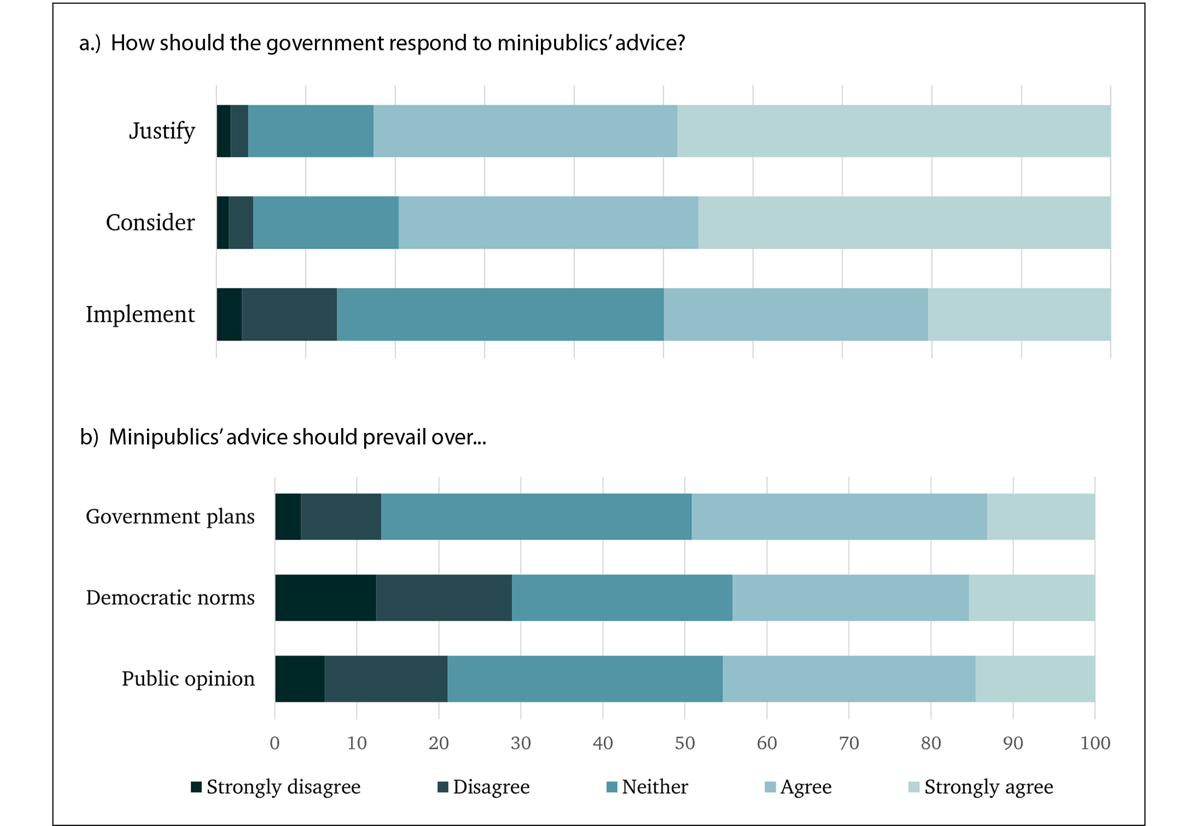
Figure 2: Percentage of respondents (dis)agreeing with statements on preferred minipublic uptake.
Note: Corresponding descriptive statistics can be found in Appendix Table B3.
I begin by examining how respondents would like elected representatives to respond to the advice of minipublics (RQ1). Interestingly, I observe that respondents do not want minipublics to go by unnoticed and, instead, prefer them to have an impact in the political arena. Specifically, they overwhelmingly want the government to justify why it does or does not follow minipublics’ recommendations (82.4% (strongly) agreed) and to take these into consideration when making political decisions (79.6% (strongly) agreed). Yet, they were not as outspoken when it comes to whether or not minipublics’ recommendations should be exactly implemented (49.9% (strongly) agreed).
Next, I also scrutinise the extent to which respondents want the advice of minipublics to prevail over other inputs (RQ2). Here, respondents seem on the fence as to whether the recommendations should be implemented even if they are at odds with government plans (49.1% (strongly) agreed), democratic norms such as respect for minorities (44.2% (strongly) agreed) or public opinion (45.4% (strongly) agreed).
Finally, I investigate the extent to which the preferred uptake of minipublics varies among respondents with different levels of discontent with present-day democracy (RQ3). Figure 3 plots the mean levels and 95% confidence intervals of preferred uptake across political discontent. Here, I only observe some small differences in preferred minipublic uptake depending on respondents’ discontent with democracy’s functioning. For example, it seems that discontented citizens tend to view the direct implementation of minipublics’ recommendations a bit more favourably than their contented counterparts. This is also indicated by the regression analyses reported in Figure 4. Overall, these suggest that the more respondents are discontented with democracy’s functioning, the more they tend to prefer minipublics to have an impact on political decision-making and to prevail over other inputs. Yet, these associations are modest in size and sometimes flirt with conventional significance levels, with the exploratory nature of the analyses complicating the interpretation thereof.
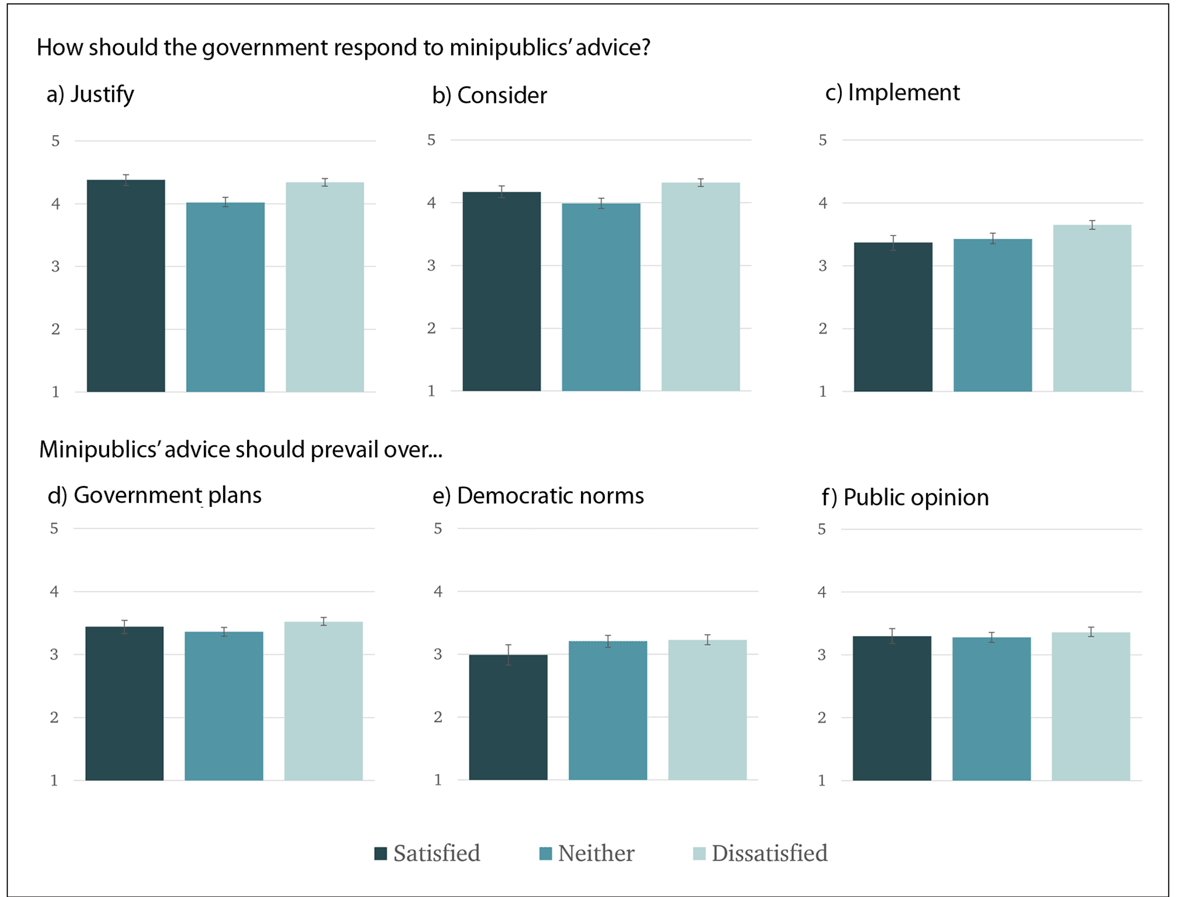
Figure 3: Mean levels of preferred minipublic uptake across levels of political discontent (with 95% confidence intervals in error bars).
Note: n = 1748. The scale ranges from 1 ‘Strongly disagree’ to 5 ‘Strongly agree’. Categories of political dissatisfaction are scale-based: 1/2 = satisfied; 3 = neither; 4/5 = dissatisfied. More detailed descriptive statistics can be found in Appendix Table B4.
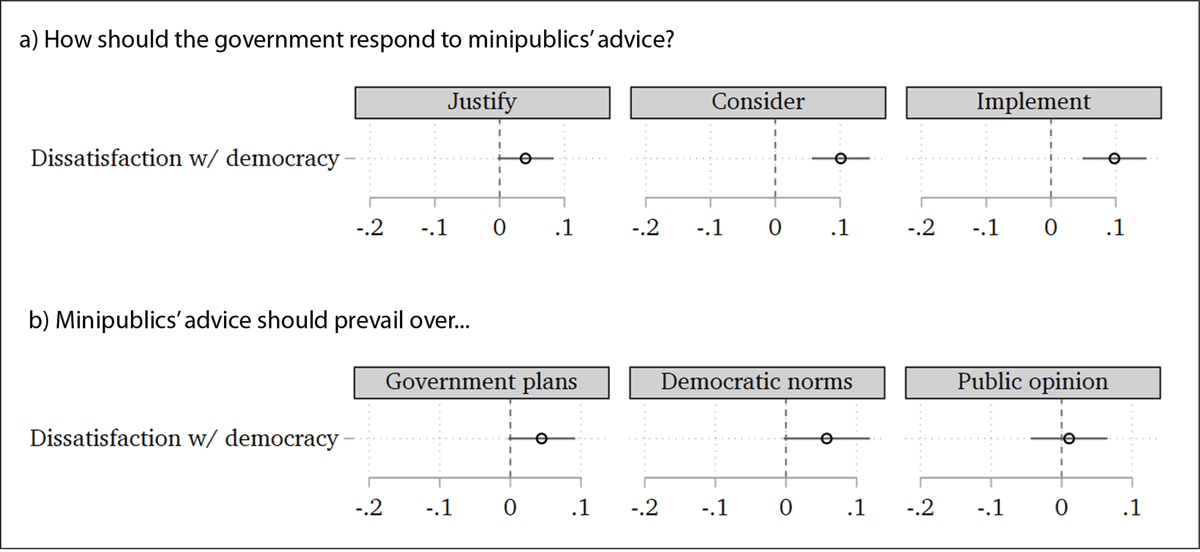
Figure 4: Regression of preferred minipublic uptake on political discontent.
Note: n = 1748. Estimates are non-standardised coefficients with 95% confidence intervals. These models include the following additional variables: sex, age, education level, region, political interest and vote intention. The full regression models are available in Appendix Tables B5a–B5c.
In summary, albeit such modest variations, contented and discontented respondents alike seem to want the government to justify its course of action and to consider minipublics’ recommendations in decision-making; they are both more hesitant regarding whether the government should directly implement these. In a similar vein, both contented and discontented respondents are rather undecided about what should happen if minipublic recommendations conflict with government plans, democratic norms or public opinion.
Conclusion
Deliberative minipublics are on the rise, and they are oftentimes suggested as a way to address widespread dissatisfaction with the existing representative system (e.g., OECD 2020; Vrydagh 2023). But do these novel tools appeal to those for whom democratic decision-making is often reformed in the first place, namely discontented citizens? Using data from Belgium (n = 5901), I find that support for advisory minipublics is fairly high on average, and more pronounced among those who are discontented with present-day politics. In a follow-up study (n = 1748), I observe that both contented and discontented citizens do not want minipublics to be just for show; they want them to have an impact in the political realm, preferably in the form of the government justifying its course of action and considering the advice when making political decisions. At the same time, they seem rather undecided on whether the government should directly implement minipublics’ recommendations and what should happen if these are at odds with government plans, democratic norms or public opinion.
Where does that leave us? On the one hand, one may argue that discontented citizens’ support for advisory minipublics is something on which they see eye to eye with political elites. After all, previous studies show that political elites are hesitant to give away decision-making power; they prefer advisory over binding tools, thereby making the former more likely to occur in practice than the latter (Garry et al. 2022; Koskimaa & Rapeli 2020; Rangoni, Bedock & Talukder 2021). This preference also coincides with that of scholars who raise normative objections against the use of binding minipublics (most prominently, Lafont 2020). Indeed, the findings suggest that the preferences of political elites and critical scholars do not necessarily contradict those of the general public—including those who are discontented—and, rather, that they all tend to approve of advisory minipublics ex-ante.
On the other hand, one could also dispute that the use of advisory minipublics is likely to raise tensions between political elites and discontented citizens ex-post. Several studies indicate that political elites may want to use minipublics to their own advantage. This can, for instance, take the form of organising minipublics to give people a sense of being listened to but without the intention of genuinely and sincerely taking their outcomes into account (Fung & Wright 2003; Koskimaa & Rapeli 2020; Oross & Tap 2021). It can also manifest as elected representatives legitimising their own political agenda by cherry-picking recommendations that correspond with their goals while ignoring or dismissing those that do not (Font et al. 2018; Setälä 2017; Smith 2014). But what would discontented citizens think of this? There is some indication that citizens will not turn a blind eye and may even become more discontented than before (Hibbing & Theiss-Morse 2008; van Dijk & Lefevere 2023). In fact, this paper indicates that both discontented and contented citizens want minipublics’ recommendations to have an impact in the political realm. Hence, it seems that the use of minipublics in their current format—as advisory tools that often lack impact on political decision-making—aligns with politicians’ but not citizens’ preferences for democratic decision-making.
This paper opens up several questions that can be tackled in future research. To begin with, we do not know if discontented citizens are genuinely supportive of minipublics or if any adjustment to the status quo appeals to them. In this study, I have measured support for the use of minipublics as such rather than asking respondents to indicate which novel procedural tools they like most or least (such as referendums, expert involvement, etc.). Future studies could help to better understand whether and when discontented citizens express support for the use of advisory minipublics instead of a desire for change in any direction. This may also feed into democratic design (Saward 2021; Warren 2017).
Besides, future studies could take a next step in testing if discontent with specific—but not all—aspects of the existing political system fuels support for minipublics. The high covariance between the measures of discontent with politicians, processes and policies prevents me from empirically differentiating between them and, therefore, from drawing firm conclusions about the separate effects of these specific sources of discontent on support for minipublics. At the same time, I need to emphasise that the findings indicate support for advisory minipublics to be lower but not low among contented citizens. What shapes their thinking about the use of minipublics if it is not so much frustration with the status quo? A qualitative study could help to understand the extent to which minipublics retain public support even if their use actually alleviates widespread disenchantment with the existing system.
Moreover, future studies could help to disentangle how citizens’ perspectives on advisory minipublics and their uptake relate to political discontent in different countries (e.g., Goldberg & Bächtiger 2023; Pilet et al. 2023). The presented findings are situated in Belgium, a country in which only a limited number of minipublics have been organised on the national level (OECD 2020; Paulis et al. 2021). Besides, its most well-known example of the G1000 aspired to ‘breathe fresh air into the democratic system’; yet it was not linked to formal decision-making structures (Caluwaerts & Reuchamps 2018: 6). In contexts of limited experience with minipublics, therefore, it may be that citizens think of advisory minipublics as being able to bring about substantial change to the status quo of representative politics—and, hence, help to explain the finding that it is discontented citizens who are more supportive of advisory minipublics. As such, future studies could examine citizens’ perspectives on advisory minipublics and their role in decision-making across different times and places.
More broadly, this also calls for insights into the links between perceptions and reality as well as between expectations and experiences. This paper focuses on citizens’ perceptions of the existing political system and their expectations about advisory minipublics. For example, it would be interesting to shift the focus from perceived deficiencies to studying to what extent minipublics can tackle actual problems that exist in society (e.g., following the works of Geißel, Kramling & Paulus 2019; Leemann & Wasserfallen 2016 on referendums). In addition, future studies could examine how experience with minipublics affects support for these tools among discontented citizens. Here, an interesting pathway is to differentiate between experiences (Spada & Ryan 2017). It could well be that advisory minipublics are positively appraised in countries where they have been consequential (e.g., Ireland’s citizens’ assembly on abortion; Farrell, Suiter & Harris 2019) but not in those where they lacked impact (e.g., the French Convention, Citoyenne pour le Climat; Courant 2021; Giraudet et al. 2022). This latter, in particular, could have important ramifications for our understanding of citizens’ outlook on minipublics, given that a lack of full impact almost seems to be the rule rather than the exception (Arnold 2022; Font et al. 2018; OECD 2020; Vrydagh & Caluwaerts 2023).
Relatedly, it is also interesting to examine who, in reality, sees their viewpoints and interests reflected in the advice of minipublics. Although these tools are often celebrated for their ability to bring a broad diversity of citizens to the table, there is also concern that they may reinforce—rather than remedy—the inequalities that exist in the current political system (Paulis et al. 2022; Talukder & Pilet 2021). This is evidenced by a higher rate of acceptance of the invitation to participate in a minipublic among well-resourced citizens (e.g., those who are higher-educated and politically interested; Curato and Niemeyer 2013; Devillers et al. 2021; Farrell & Stone, 2020; Karjalainen & Rapeli 2015). The recommendations formulated by minipublics may, therefore, be disproportionately tailored to some citizens; in particular, to those who are already well-served in the existing system (Binnema & Michels 2022). When doing so, future studies could also take the role of outcome favourability into account. It could be that citizens’ preferences on which source of input should prevail in decision-making depend on the extent to which (they think) it aligns with their personal opinions and interests (Goldberg & Bächtiger 2023; Pilet et al. 2023). This is an open question that can be addressed in future research.
Overall, this study suggests that discontented citizens are not only more supportive of binding minipublics that bypass representative institutions, but also of those with an advisory capacity that function as additions to the existing political system. At the same time, regardless of their level of political (dis)content, citizens do not want advisory minipublics to go by unnoticed and prefer minipublics’ recommendations to be taken up in the political realm.
Notes
- While deliberative minipublics are one way to involve citizens in political decision-making, they differ in the number of citizens involved, the selection method and their proceedings, for instance, when compared to other tools such as referendums and participatory budgeting (see, e.g., Smith 2009 for a more elaborate discussion of these differences). In turn, minipublics are designed and realised in different ways and formats, including citizens’ assemblies, citizens’ juries, consensus conferences, deliberative polls and citizen initiative reviews (Curato et al. 2021; Goodin & Dryzek 2006). ⮭
- In effect, deliberative democrats argue that deliberative tools may overcome specific ills of democracy, including political apathy, gridlock and polarisation (Bächtiger et al. 2018; Curato et al. 2017; Dryzek et al. 2019). ⮭
- For instance, Arnold (2022) looks at 81 cases from the Participedia dataset and finds that roughly 60% of the minipublics did not lead to a change in public policy; about 35% had a partial impact and 5% had a full impact (while the OECD (2020) reports 11%; 53% and 36%, respectively, based on 55 cases). ⮭
- This is not to say that minipublics are only organised with the purpose of formulating recommendations on a political issue. For instance, another common goal of minipublics is the formation of considered judgements on a particular issue (Fishkin 2018). In doing so, they can be consequential in other ways too, such as by spurring public debate or informing public opinion (Gastil & Knobloch 2020; Goodin & Dryzek 2006). Other goals of minipublics that are currently discussed in the academic literature include scrutinising decisions by public authorities or anticipating future issues (Lafont 2020; Warren & Gastil 2015). ⮭
- The analytical sample includes respondents who have answered all items under study. This allows me to be confident that observed differences in means and associations are not a result of differences in sub-samples. ⮭
- A structural equation model that introduces both the higher-order factor of discontent and the lower-order factors simultaneously to predict support for advisory minipublics cannot be computed. This is likely due to multicollinearity, evidenced by the previously discussed standardised covariances. Therefore, I discuss the results of this model separately from the one that includes the higher-order factor of discontent. ⮭
- This dataset also includes measures of support for minipublics, dissatisfaction with democracy’s functioning and dissatisfaction with politicians. This allows me to perform another test of H1 at another point in time—that is, it enables me to see whether the findings from the election survey hold at a time when the federal government had been in power for over a year. Here, I do not find support for H1. While the direction of the results is again positive, the association between dissatisfaction with democracy’s functioning and support for minipublics does not reach statistical significance (p = 0.184). Its standardised effect size of b = 0.033 is, nonetheless, of similar size as the one reported in Table 1. Next, I also examine the association between dissatisfaction with politicians and support for minipublics. In line with H2, I find a positive and statistically significant association with a standardised effect size of b = 0.080; p = 0.001. The item descriptions and full results are available in Appendix Tables B6–B8. ⮭
Additional File
The additional file for this article can be found as follows:
Appendices. Appendix A and B. DOI: https://doi.org/10.16997/jdd.1451.s1
Acknowledgements
I am thankful to the anonymous reviewers for their insightful feedback. I am also grateful to the Democratic Innovations and Legitimacy Research Group at KU Leuven for their constructive and encouraging support throughout this project.
Funding Information
This project has received funding from the European Research Council (ERC) under the European Union’s Horizon 2020 research and innovation programme (Grant agreement no. 759736). This publication reflects the authors’ views, and the Agency is not responsible for any use that may be made of the information it contains. This project (G0F0218N) has received funding from the FWO and F.R.S.-FNRS under the Excellence of Science (EOS) programme.
Competing Interests
The author has no competing interests to declare.
References
Arnold, S. (2022). Roads to minipublic success: Exploring ‘top-down’ and ‘bottom-up’ pathways to uptake based on a new dataset of deliberative minipublics. Presented at the ECPR General Conference in Innsbruck.
Bächtiger, A., Dryzek, J. S., Mansbridge, J., & Warren, M. E. (2018). Deliberative democracy: An introduction. In A. Bachtiger, J. S. Dryzek, J. Mansbridge, & M. E. Warren (Eds.), The Oxford handbook of deliberative democracy (pp. 1–32). Oxford University Press. http://doi.org/10.1093/oxfordhb/9780198747369.013.50
Bedock, C., & Pilet, J.-B. (2021). Who supports citizens selected by lot to be the main policymakers? A study of French citizens. Government and Opposition, 56(3), 485–504. http://doi.org/10.1017/gov.2020.1
Bedock, C., & Pilet, J.-B. (2023). Enraged, engaged, or both? A study of the determinants of support for consultative vs. binding mini-publics. Representation, 59(1), 33–53. http://doi.org/10.1080/00344893.2020.1778511
Binnema, H., & Michels, A. (2022). Does democratic innovation reduce bias? The G1000 as a new form of local citizen participation. International Journal of Public Administration, 45(6), 475–485. http://doi.org/10.1080/01900692.2020.1863425
Boulianne, S. (2018). Mini-publics and public opinion: Two survey-based experiments. Political Studies, 66(1), 119–136. http://doi.org/10.1177/0032321717723507
Caluwaerts, D., & Reuchamps, M. (Eds.). (2018). The legitimacy of citizen-led deliberative democracy. Routledge. http://doi.org/10.4324/9781315270890
Caramani, D. (2017). Will vs. reason: The populist and technocratic forms of political representation and their critique to party government. American Political Science Review, 111(1), 54–67. http://doi.org/10.1017/S0003055416000538
Courant, D. (2021). The promises and disappointments of the French Citizens’ Convention for Climate. Deliberative Democracy Digest. Retrieved from https://www.publicdeliberation.net/the-promises-and-disappointments-of-the-french-citizens-convention-for-climate/
Curato, N., Dryzek, J. S., Ercan, S. A., Hendriks, C. M., & Niemeyer, S. (2017). Twelve key findings in deliberative democracy research. Daedalus, 146(28–38), 173–190. http://doi.org/10.1162/DAED_a_00444
Curato, N., Farrell, D. M., Geisel, B., Gronlund, K., Mockler, P., Pilet, J.-B., Renwick, A., Rose, J., Setälä, M., & Suiter, J. (2021). Deliberative mini-publics: Core design features. Bristol University Press. http://doi.org/10.1332/policypress/9781529214109.001.0001
Curato, N., & Niemeyer, S. (2013). Reaching out to overcome political apathy: Building participatory capacity through deliberative engagement. Politics & Policy, 41(3), 355–383. http://doi.org/10.1111/polp.12015
Dalton, R. J. (1984). Cognitive mobilization and partisan dealignment in advanced industrial democracies. The Journal of Politics, 46(1), 264–284. http://doi.org/10.2307/2130444
de Fine Licht, J., Agerberg, M., & Esaiasson, P. (2022). ‘It’s not over when it’s over’—Post-decision arrangements and empirical legitimacy. Journal of Public Administration Research and Theory, 32(1), 183–199. http://doi.org/10.1093/jopart/muab023
den Ridder, J., Fiselier, T., & van Ham, C. (2021). Draagvlak voor het burgerforum: Een verkenning van de nederlandse publieke opinie. published by the Sociaal en Cultureel Planbureau. Retrieved from https://www.scp.nl/publicaties/publicaties/2021/11/04/draagvlakvoor-het-burgerforum
Devillers, S., Vrydagh, J., Caluwaerts, D., & Reuchamps, M. (2021). Looking in from the outside: How do invited but not selected citizens perceive the legitimacy of a minipublic? Journal of Deliberative Democracy, 17(1), 149–159. http://doi.org/10.16997/jdd.961
Dommett, K., & Temple, L. (2019). What people want to see in parties today. Report. Retrieved from: https://www.involve.org.uk/our-work/our-projects/what-do-people-want-see-political-parties-today
Dryzek, J. S., Bachtiger, A., Chambers, S., Cohen, J., Druckman, J. N., Felicetti, A., Fishkin, J. S., Farrell, D. M., Fung, A., Gutmann, A., Landemore, H., Mansbridge, J., Marien, S., Neblo, M. A., Niemeyer, S., Setälä, M., Slothuus, R., Suiter, J., Thompson, D., & Warren, M. E. (2019). The crisis of democracy and the science of deliberation. Science, 363(6432), 1144–1146. http://doi.org/10.1126/science.aaw2694
Esaiasson, P., Gilljam, M., & Persson, M. (2017). Responsiveness beyond policy satisfaction: Does it matter to citizens? Comparative Political Studies, 50(6), 739–765. http://doi.org/10.1177/0010414015626445
Esaiasson, P., & Wlezien, C. (2017). Advances in the study of democratic responsiveness: An introduction. Comparative Political Studies, 50(6), 699–710. http://doi.org/10.1177/0010414016633226
ESS Round 10. (2022). European Social Survey Round 10 Data (2020). Data file edition 3.1. Sikt - Norwegian Agency for Shared Services in Education and Research, Norway – Data Archive and distributor of ESS data for ESS ERIC. http://doi.org/10.21338/NSD-ESS10-2020
Farrell, D. M., & Stone, P. (2020). Sortition and mini-publics: A different kind of representation. In R. Rohrschneider & J. Thomassen (Eds.), Handbook of political representation in liberal democracies (pp. 228–248). Oxford University Press. http://doi.org/10.1093/oxfordhb/9780198825081.013.11
Farrell, D. M., Suiter, J., & Harris, C. (2019). ‘Systematizing’ constitutional deliberation: The 2016–18 citizens’ assembly in Ireland. Irish Political Studies, 34(1), 113–123. http://doi.org/10.1080/07907184.2018.1534832
Fishkin, J. S. (2018). Democracy when the people are thinking: Revitalizing our politics through public deliberation. Oxford University Press. http://doi.org/10.1093/oso/9780198820291.001.0001
Font, J., Smith, G., Galais, C., & Alarcon, P. (2018). Cherry-picking participation: Explaining the fate of proposals from participatory processes. European Journal of Political Research, 57(3), 615–636. http://doi.org/10.1111/1475-6765.12248
Fung, A. (2015). Putting the public back into governance: The challenges of citizen participation and its future. Public Administration Review, 75(4), 513–522. http://doi.org/10.1111/puar.12361
Fung, A., & Wright, E. O. (2003). Deepening democracy: Institutional innovations in empowered participatory governance. Verso Books.
Garry, J., Pow, J., Coakley, J., Farrell, D., O’Leary, B., & Tilley, J. (2022). The perception of the legitimacy of citizens’ assemblies in deeply divided places? Evidence of public and elite opinion from consociational Northern Ireland. Government and Opposition, 57(3), 532–551. http://doi.org/10.1017/gov.2021.4
Gastil, J., & Knobloch, K. (2020). Hope for democracy: How citizens can bring reason back into politics. Oxford University Press. http://doi.org/10.1093/oso/9780190084523.001.0001
Geißel, B., Kramling, A., & Paulus, L. (2019). More or less equality? Direct democracy in Europe from 1990 to 2015. Zeitschrift fur Vergleichende Politikwissenschaft, 13, 491–525. http://doi.org/10.1007/s12286-019-00435-3
Gerwin, M. (2018). Citizens’ assemblies: Guide to democracy that works. Otwarty Plan.
Gherghina, S., & Geißel, B. (2020). Support for direct and deliberative models of democracy in the UK: Understanding the difference. Political Research Exchange, 2(1), 1809474. http://doi.org/10.1080/2474736X.2020.1809474
Giraudet, L.-G., Apouey, B., Arab, H., Baeckelandt, S., Begout, P., Berghmans, N., Blanc, N., Boulin, J.-Y., Buge, E., Courant, D., Dahan, A., Fabre, A., Fourniau, J.-M., Gaborit, M., Granchamp, L., Guillemot, H., Jeanpierre, L., Landemore, H., Laslier, J.-F., … Tournus, S. (2022). ‘Co-construction’ in deliberative democracy: Lessons from the French Citizens’ Convention for Climate. Humanities and Social Sciences Communications, 9. http://doi.org/10.1057/s41599-022-01212-6
Goldberg, S. (2021). Just advisory and maximally representative: A conjoint experiment on non-participants’ legitimacy perceptions of deliberative forums. Journal of Deliberative Democracy, 17(1), 56–75. http://doi.org/10.16997/jdd.973
Goldberg, S., & Bächtiger, A. (2023). Catching the ‘deliberative wave’? How (disaffected) citizens assess deliberative citizen forums. British Journal of Political Science, 53, 239–247. http://doi.org/10.1017/S0007123422000059
Goodin, R. E., & Dryzek, J. S. (2006). Deliberative impacts: The macro-political uptake of mini-publics. Politics & Society, 34(2), 219–244. http://doi.org/10.1177/0032329206288152
Hibbing, J. R., & Theiss-Morse, E. (2002). Stealth democracy: Americans’ beliefs about how government should work. Cambridge University Press. http://doi.org/10.1017/CBO9780511613722
Hibbing, J. R., & Theiss-Morse, E. (2008). Voice, validation, and legitimacy. In B. A. Sullivan, M. Snyder, & J. L. Sullivan (Eds.), Cooperation: The political psychology of effective human interaction (pp. 123–142). Blackwell Publishing.
Inglehart, R. (1997). Modernization and postmodernization: Cultural, economic, and political change in 43 societies. Princeton University Press. http://doi.org/10.1515/9780691214429
Jacobs, D., & Kaufmann, W. (2021). The right kind of participation? The effect of a deliberative mini-public on the perceived legitimacy of public decision-making. Public Management Review, 23(1), 91–111. http://doi.org/10.1080/14719037.2019.1668468
Jacquet, V. (2019). The role and the future of deliberative mini-publics: A citizen perspective. Political Studies, 67(3), 639–657. http://doi.org/10.1177/0032321718794358
Jacquet, V., Niessen, C., & Reuchamps, M. (2022). Sortition, its advocates and its critics: An empirical analysis of citizens’ and MPs’ support for random selection as a democratic reform proposal. International Political Science Review, 43(2), 295–316. http://doi.org/10.1177/0192512120949958
Jennings, W., Stoker, G., & Twyman, J. (2016). The dimensions and impact of political discontent in Britain. Parliamentary Affairs, 69(4), 876–900. http://doi.org/10.1093/pa/gsv067
Karjalainen, M., & Rapeli, L. (2015). Who will not deliberate? Attrition in a multi-stage citizen deliberation experiment. Quality & Quantity, 49, 407–422. http://doi.org/10.1007/s11135-014-9993-y
Klingemann, H.-D. (2014). Dissatisfied democrats: Democratic maturation in old and new democracies. In R. J. Dalton & C. Welzel (Eds.), Civic culture transformed: From allegiant to assertive citizens (pp. 116–157). Cambridge University Press. http://doi.org/10.1017/CBO9781139600002.010
Koskimaa, V., & Rapeli, L. (2020). Fit to govern? Comparing citizen and policymaker perceptions of deliberative democratic innovations. Policy Press, 48(4), 637–652. http://doi.org/10.1332/030557320X15870515357288
Lafont, C. (2020). Democracy without shortcuts: A participatory conception of deliberative democracy. Oxford University Press. http://doi.org/10.1093/oso/9780198848189.001.0001
Leemann, L., & Wasserfallen, F. (2016). The democratic effect of direct democracy. American Political Science Review, 110(4), 750–762. http://doi.org/10.1017/S0003055416000307
Linde, J., & Ekman, J. (2003). Satisfaction with democracy: A note on a frequently used indicator in comparative politics. European Journal of Political Research, 42(3), 391–408. http://doi.org/10.1111/1475-6765.00089
Macq, H., & Jacquet, V. (2023). Institutionalising participatory and deliberative procedures: The origins of the first permanent citizens’ assembly. European Journal of Political Research, 62(1), 156–173. http://doi.org/10.1111/1475-6765.12499
Martini, S., & Quaranta, M. (2020). Citizens and democracy in Europe: Contexts, changes and political support. Palgrave Macmillan. http://doi.org/10.1007/978-3-030-21633-7
Medvic, S. (2019). Explaining support for stealth democracy. Representation, 55(1), 1–19. http://doi.org/10.1080/00344893.2019.1581076
Neblo, M. A., Esterling, K. M., & Lazer, D. M. (2018). Politics with the people: Building a directly representative democracy. Cambridge University Press. http://doi.org/10.1017/9781316338179
Norris, P. (2011). Democratic deficit: Critical citizens revisited. Cambridge University Press. http://doi.org/10.1017/CBO9780511973383
OECD. (2020). Innovative citizen participation and new democratic institutions. Retrieved from: http://doi.org/10.1787/339306da-en
Oross, D., & Tap, P. (2021). Using deliberation for partisan purposes: Evidence from the Hungarian National Consultation. Innovation: The European Journal of Social Science Research, 34(5), 803–820. http://doi.org/10.1080/13511610.2021.1995335
Parry, L. J., Curato, N., & Dryzek, J. S. (2023). Deliberative integrity: Emerging consensus and divergent views in the governance of deliberative mini-publics. Working paper.
Paulis, E., Pilet, J.-B., Panel, S., Vittori, D., & Close, C. (2021). The POLITICIZE dataset: An inventory of deliberative mini-publics (DMPs) in Europe. European Political Science, 20, 521–542. http://doi.org/10.1057/s41304-020-00284-9
Paulis, E., Pilet, J.-B., Rojon, S., & Vittori, D. (2022). Has deliberation real spillover effects? Comparing the impact of the exposure to a citizens’ assembly for the participants (mini-public) and the non-participants (maxipublic). Presented at the ECPR General Conference in Innsbruck.
Pew Research Center. (2019). Many across the globe are dissatisfied with how democracy is working. https://www.pewresearch.org/global/2019/04/29/many-across-the-globeare-dissatisfied-with-how-democracy-is-working/
Pilet, J.-B., Bol, D., Vittori, D., & Paulis, E. (2023). Public support for deliberative citizens’ assemblies selected through sortition: Evidence from 15 countries. European Journal of Political Research, 62(3), 873–902. http://doi.org/10.1111/1475-6765.12541
Pow, J., van Dijk, L., & Marien, S. (2020). It’s not just the taking part that counts: ‘Like me’ perceptions connect the wider public to minipublics. Journal of Deliberative Democracy, 16(2), 43–55. http://doi.org/10.16997/jdd.368
Powell, G. (2009). The ideological congruence controversy: The impact of alternative measures, data, and time periods on the effects of election rules. Comparative Political Studies, 42(12), 1475–1497. http://doi.org/10.1177/0010414009332147
Rangoni, S., Bedock, C., & Talukder, D. (2021). More competent thus more legitimate? MPs’ discourses on deliberative mini-publics. Acta Politica, 58, 531–551. http://doi.org/10.1057/s41269-021-00209-4
Renwick, A., Lauderdale, B., Russell, M., & Cleaver, J. (2022). What kind of democracy do people want? Results of a survey of the UK population. First report of the Democracy in the UK after Brexit Project. The Constitution Unit. https://www.ucl.ac.uk/constitutionunit/sites/constitution_unit/files/report_1_final_digital.pdf
Rojon, S., Rijken, A. J., & Klandermans, B. (2019). A survey experiment on citizens’ preferences for ‘vote–centric’ vs. ‘talk–centric’ democratic innovations with advisory vs. binding outcomes. Politics and Governance, 7(2), 213–226. http://doi.org/10.17645/pag.v7i2.1900
Saward, M. (2021). Democratic design. Oxford University Press. http://doi.org/10.1093/oso/9780198867227.001.0001
Setälä, M. (2017). Connecting deliberative mini-publics to representative decision making. European Journal of Political Research, 56(4), 846–863. http://doi.org/10.1111/1475-6765.12207
Smith, G. (2009). Democratic innovations: Designing institutions for citizen participation. Cambridge University Press. http://doi.org/10.1017/CBO9780511609848
Smith, G. (2014). Deliberative democracy and mini-publics. In K. Newton & B. Geisel (Eds.), Evaluating democratic innovations: Curing the democratic malaise? (pp. 90–111). Routledge.
Smith, G., & Setälä, M. (2018). Mini-publics and deliberative democracy. In A. Bachtiger, J. S. Dryzek, J. Mansbridge, & M. E. Warren (Eds.), The Oxford handbook of deliberative democracy (pp. 300–314). Oxford University Press. http://doi.org/10.1093/oxfordhb/9780198747369.013.27
Spada, P., & Ryan, M. (2017). The failure to examine failures in democratic innovation. PS: Political Science & Politics, 50(3), 772–778. http://doi.org/10.1017/S1049096517000579
Talukder, D., & Pilet, J.-B. (2021). Public support for deliberative democracy. A specific look at the attitudes of citizens from disadvantaged groups. Innovation: The European Journal of Social Science Research, 34(5), 656–676. http://doi.org/10.1080/13511610.2021.1978284
Theuwis, M.-I., van Ham, C., & Jacobs, K. (2021). A meta-analysis of the effects of democratic innovations on citizens in advanced industrial democracies. ConstDelib Working Paper Series, no. 15.
Ulbig, S. G. (2002). Policies, procedures, and people: Sources of support for government? Social Science Quarterly, 83(3), 789–809. http://doi.org/10.1111/1540-6237.00115
Valgarðsson, V. O., & Devine, D. (2022). What satisfaction with democracy? A global analysis of “satisfaction with democracy” measures. Political Research Quarterly, 75(3), 576–590. http://doi.org/10.1177/10659129211009605
van der Does, R., & Jacquet, V. (2023). Small-scale deliberation and mass democracy: A systematic review of the spillover effects of deliberative minipublics. Political Studies, 71(1), 218–237. http://doi.org/10.1177/00323217211007278
van Dijk, L., & Lefevere, J. (2023). Can the use of minipublics backfire? Examining how policy adoption shapes the effect of minipublics on political support among the general public. European Journal of Political Research, 62(1), 135–155. http://doi.org/10.1111/1475-6765.12523
Vrydagh, J. (2023). The minipublic bubble: How the contributions of minipublics are conceived in Belgium (2001–2021). European Political Science Review, 1–16. http://doi.org/10.1017/S1755773922000595
Vrydagh, J., & Caluwaerts, D. (2023). How do mini-publics affect public policy? Disentangling the influences of a mini-public on public policy using the sequential impact matrix framework. Representation, 59(1), 117–136. http://doi.org/10.1080/00344893.2020.1862901
Walsh, C. D., & Elkink, J. A. (2021). The dissatisfied and the engaged: Citizen support for citizens’ assemblies and their willingness to participate. Irish Political Studies, 36(4), 647–666. http://doi.org/10.1080/07907184.2021.1974717
Warren, M. E. (2017). A problem-based approach to democratic theory. American Political Science Review, 111(1), 39–53. http://doi.org/10.1017/S0003055416000605
Warren, M. E., & Gastil, J. (2015). Can deliberative minipublics address the cognitive challenges of democratic citizenship? The Journal of Politics, 77(2), 562–574. http://doi.org/10.1086/680078
Warren, M. E., & Pearse, H. (2008). Designing deliberative democracy: The British Columbia Citizens’ Assembly. Cambridge University Press. http://doi.org/10.1017/CBO9780511491177
Welzel, C., & Dalton, R. J. (2014). From allegiant to assertive citizens. In R. J. Dalton & C. Welzel (Eds.), Civic culture transformed: From allegiant to assertive citizens (pp. 282–306). Cambridge University Press. http://doi.org/10.1017/CBO9781139600002.017
Werner, H., & Marien, S. (2018). Overcoming the limits of small-scale participatory processes? How involving the few can affect legitimacy perceptions among the many. Presented at the ECPR GC in Hamburg.
Werner, H., Marien, S., & Felicetti, A. (2020). A problem-based approach to understanding public support for referendums. European Journal of Political Research, 59(3), 538–554. http://doi.org/10.1111/1475-6765.12368